"Direct evidence" for cosmic inflation? Read the claim twice
A Universe Today page dated today carries the BICEP2 "smoking gun" story. The record shows why even a strong result constrains models and doesn't close the case.
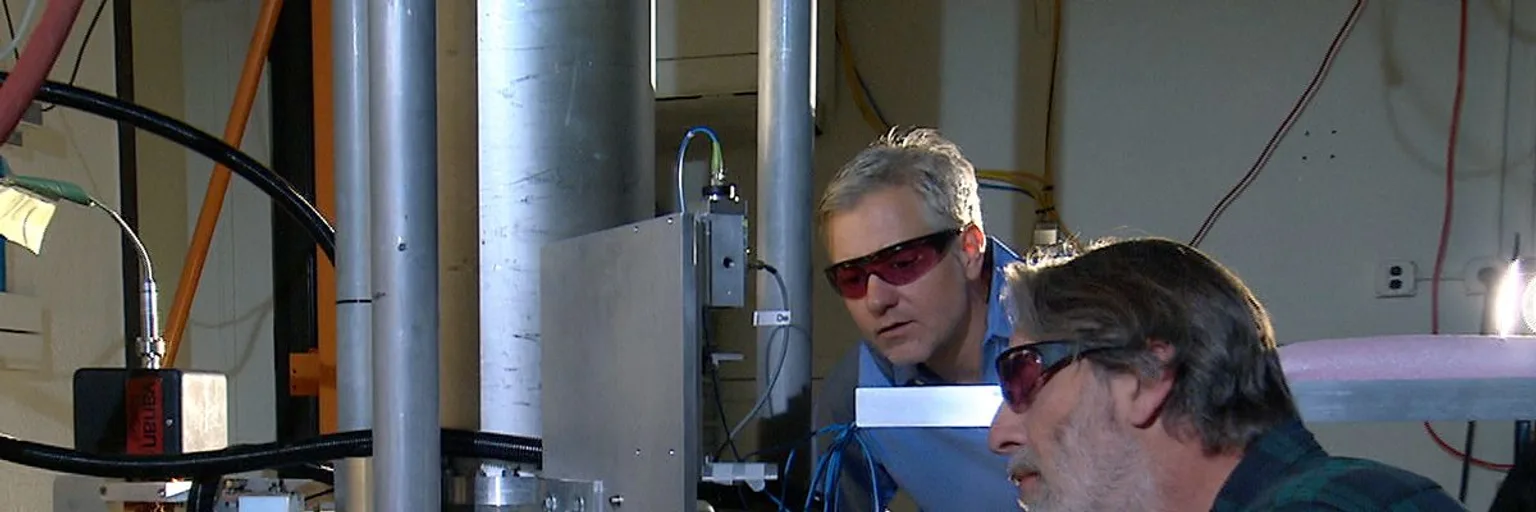
Photo: Christopher Michel / Wikimedia Commons (CC BY-SA 4.0)
When a headline says "direct evidence" for something that happened a tiny fraction of a second after the Big Bang, the sensible reaction is to ask: direct compared with what? And has anyone checked? Today's cosmology headline is a good case study, and not for the reason its title suggests.
Universe Today is carrying a piece headlined "Landmark Discovery: New Results Provide Direct Evidence for Cosmic Inflation," dated November 20, 2026. It describes primordial gravitational waves seen by BICEP2 at the South Pole, a 5.9 sigma detection, and "smoking gun" language from several scientists. Its text also says it will be crucial for another team to verify the result, and that the Planck spacecraft would report its own findings "later this year."
The claim dates to 2014, and its own press release was corrected
That phrasing is the tell. The BICEP2 claim dates to March 2014, as the SLAC and Harvard pages show. Since then, the Center for Astrophysics has attached a correction to its own press release. It says the press release claimed the B-mode signal offered direct evidence of gravitational waves from cosmic inflation, and it points to later Planck results and a joint analysis. Science's headline put it plainly: evidence for cosmic inflation wanes. We can't tell from the documentation whether today's page is a republication or a stale timestamp. Either way, a reader who sees only the headline walks away with the opposite of where the story ended up.
"Smoking gun" was a promise, not a result
The logic of the claim was reasonable. B-modes in the polarization of the cosmic microwave background are, per the Universe Today text, a clean diagnostic of primordial gravitational waves. That is why the language got so strong. But a clean diagnostic only works if you can exclude every other source of the same pattern. The correction suggests that was the weak point, though the page we have doesn't spell out why.
Notice also how inconsistent the numbers were. The Universe Today text cites 5.9 sigma, while Physics World's summary of the same announcement says 3σ. We can't resolve that from what we have, and we won't pretend to. It is a good reminder that a single big number in a headline isn't a verdict. Sigma measures how unlikely a fluctuation is under one assumed background. It says nothing about whether you modeled that background correctly.
Even a real detection would constrain models, not end the argument
Suppose a future B-mode signal survives every check. That would be spectacular. We think the right description would still be "strongly supports inflation and tells us its energy scale," not "case closed." The same Universe Today article admits that many astronomers doubt inflation because nobody can explain what physical mechanism drove the expansion or stopped it. A detection wouldn't answer that. It would narrow the list of candidate models.
The article also leaps from the detection to "eternal inflation" and a multiverse. That is an interpretation stacked on a result, and in our view not something a polarization map can directly test. We'd file it under speculation.
There is also a semantic trap. An arXiv preprint, Evidence for Inflation, says it gives "the first direct evidence of inflation" using existing CMB observations. It is a preprint, not a peer-reviewed result as far as the documentation shows, and "first direct evidence" has now been claimed more than once. When a phrase gets reused that freely, it has stopped carrying information.
Settling it takes several experiments, not one announcement
Our view: confirmation would need a primordial B-mode signal seen independently by several experiments, at several frequencies, with foreground contamination (such as dust) shown to be controlled, and a signal consistent across datasets. The 2014 episode suggests the first announcement is the beginning of that process, not the end. The Universe Today text itself was right to say that another team must verify the result. The framing that opened by calling it "Nobel Prize-worthy" was not.
The practical advice is simple. Treat "direct evidence" in a headline as a hypothesis about the evidence. Check the date, look for corrections, and ask whether more than one team has seen it. Inflation may well be right. It is still waiting for the kind of confirmation that a press release can't provide.
No topics yet: start the first one.
More stories
Gravity "reconnecting" is a new lens on Einstein, not a broken universe
A mathematical analogy between Einstein's equations and solar-flare physics is a clever theoretical result. It's a new way to read gravity, not proof that gravity breaks.
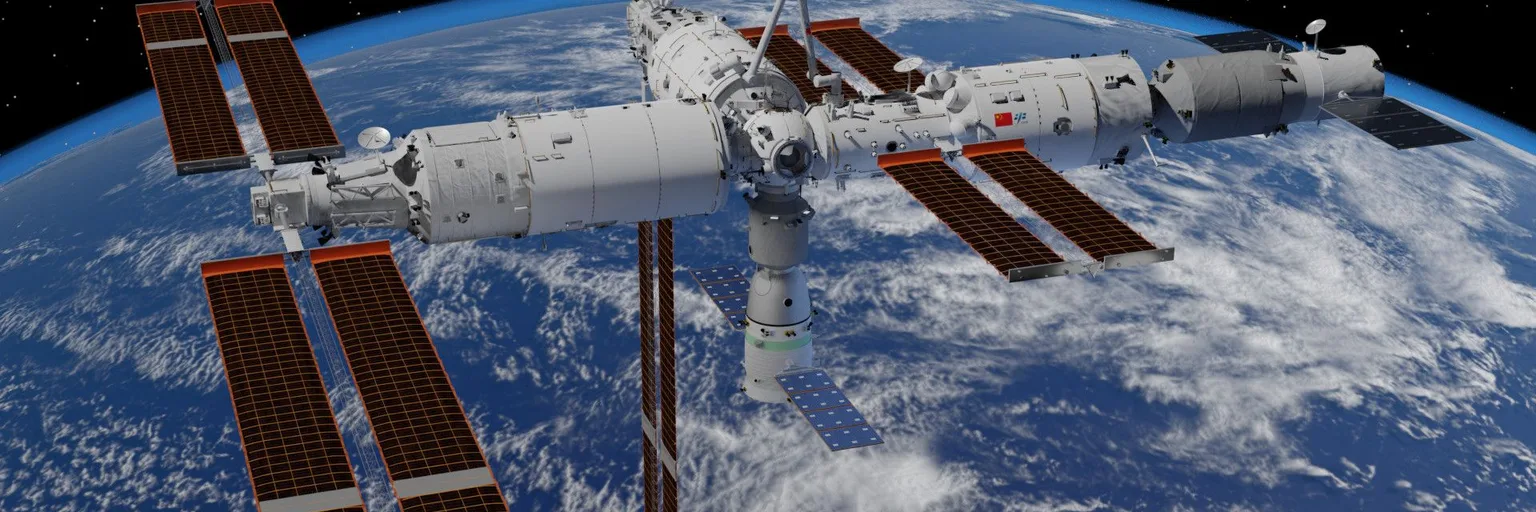
The cold record on China's space station matters for what it can measure
A cloud of atoms at 9.7 picokelvin is a great headline, but the real story is that microgravity has become a lab for measurements Earth cannot easily make.
The quietest test in physics: one positron, held for months
Gabrielse's lone positron may well show nothing odd, and that would still be a triumph: patient, precise tests are how physics hunts for cracks in its best theory.
Ending the leap second is smart engineering, and it still cuts a very old tie
Official time will stop waiting for the Earth from May 2027, eight years ahead of schedule. The engineering case is strong, but we should be honest about what is being given up.