Webb's dust factories are a clue, not proof: the early universe is being read by proxy
Webb caught metal-poor stars making dust in a nearby dwarf galaxy. That's a real step for cosmic chemistry, but it stands in for the early universe rather than showing it.
Is dust the cosmos's most underrated character? The headlines say Webb has found the "cosmic factories" that filled the early universe with stardust, and the temptation is to read that as a picture of the first galaxies caught in the act. We'd be more careful. The finding is real and interesting, but it is an inference about the distant past made from a nearby neighbor.
Webb studied a neighbor, not the early universe itself
The target is Sextans A, a dwarf galaxy 4.6 million light-years away. According to a News Minimalist summary of a study published in The Astrophysical Journal, it has only 1% to 7% of the Sun's heavy elements, which makes it, as we read it, a convenient stand-in for the chemistry of the early universe. Other coverage describes Webb detecting two uncommon types of cosmic dust there.
The most striking number comes from a census reported by Qore: fewer than 10% of the red giants in Sextans A produce dust, and only about twenty active stars work as dust factories. We have only the summaries, so we can't judge the details of the method.
The factory is smaller than the myth
Here is the part we find most interesting. When people hear "dust factories," they imagine industrial scale. The data point the other way: a tiny minority of stars carries the load. Dust production in a metal-poor galaxy looks less like a steady background process and more like a rare phase that only some stars go through.
That matters because dust is not decoration. It is raw material for later generations, and, as AtlasFuturo puts it, narrowing down which stars supply dust containing metals helps complete the picture of how the present-day universe took shape. We think that is the right framing. Dust is a bookkeeping item in cosmic chemistry, and getting the books wrong means getting the history of galaxies wrong.
Don't stretch it into "the models were wrong"
It is tempting to say this proves the first galaxies were chemically busy far sooner than models assumed. Nothing in the coverage we've seen supports that. Sextans A is a nearby galaxy being used as a proxy, not a galaxy seen when the universe was young. What the study delivers is a better census of who makes dust under low-metal conditions. That is a constraint on models, not a verdict that they were wrong.
There is a separate line of evidence that points the same way, loosely. A Webb and ALMA study of a quasar, covered by Gizmodo, places it when the universe was just 830 million years old, and the headline says it was hidden in cosmic dust. That suggests dust was already around in the very young cosmos. But two different findings don't add up to one proven story, and the link between them is our interpretation.
The real news is that dust is now countable
Our verdict: the real news is methodological. Webb can now count individual dust producers in a chemically primitive galaxy, and that turns a vague theoretical ingredient into something measurable. That is more valuable than any dramatic "models were wrong" claim.
If you read the coverage this week, keep three questions handy. Is the galaxy observed at the time in question or only resembling it? Is the claim from a peer-reviewed paper or a press summary? And does the headline describe the result or the hope behind it? Here, the answer to the first is "resembling," and that is fine, as long as nobody pretends otherwise. The dust is a main character. The first act is still being reconstructed by proxy.
No topics yet: start the first one.
More stories
The orbital nuke warning is really about our satellite dependence
The Pentagon's report on a Russian nuclear satellite matters less as a treaty scandal than as a stress test of how much of daily life hangs on fragile orbital hardware.
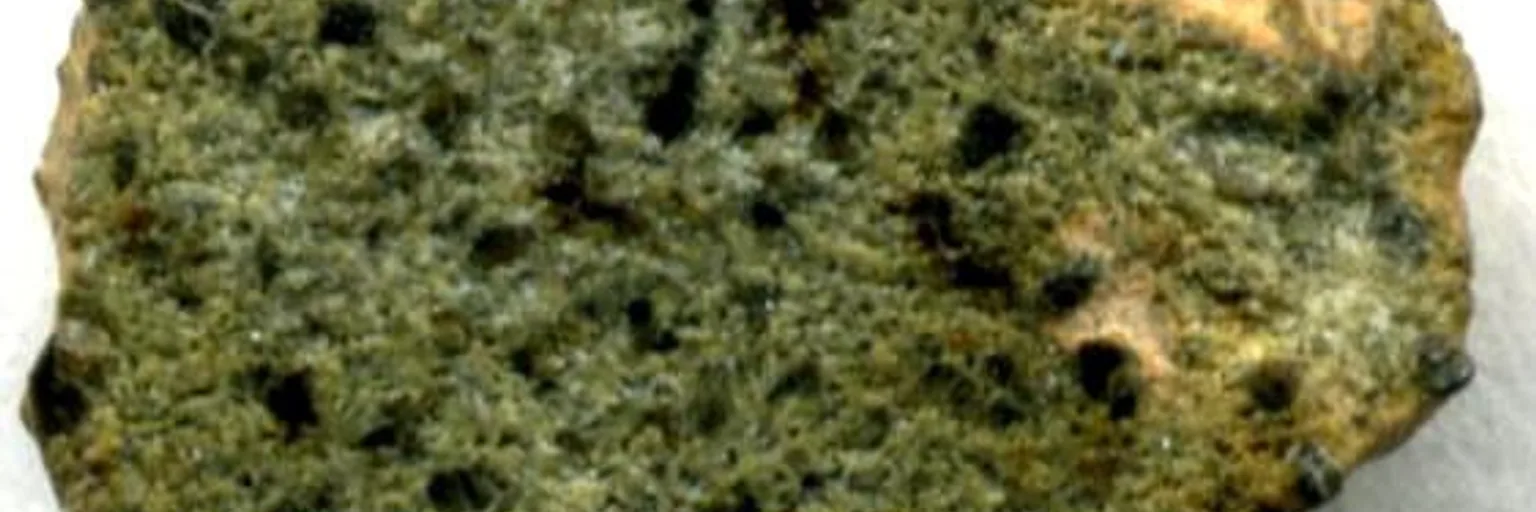
Thirteen possible homes for one Mars rock is a feature, not a flaw
A 4.1-billion-year-old meteorite with 13 candidate source sites shows how little a rock's age tells us without its geological setting, and why Mars sample return still matters.
Google's orbital haiku is a stunt; the data center is the question
A satellite wrote a haiku with a Google TPU. Charming, but the real test of orbital AI is radiation, heat and economics, and none of that has been proven yet.
CHAPEA's 378 days show Mars is a people problem, but Houston can't prove it
NASA's second year-long Mars simulation tests endurance, isolation and rationing well. It cannot test radiation, real danger or the impossibility of coming home.