UVEX is welcome, but ultraviolet astronomy still hangs by a thread
NASA's 2031 ultraviolet telescope is good news, but its slipped date and doubled price tag show how fragile a capability we rarely notice until it's gone.
Who is going to look at the ultraviolet universe when the current telescopes stop working? It's an unglamorous question, which is probably why it gets asked so rarely. Ultraviolet light can't be observed from the ground, so the capability exists only as long as someone keeps a suitable instrument in space. NASA's latest announcement is a reminder of how thin that thread is.
Here is what happened. NASA confirmed UVEX, the UltraViolet EXplorer, after a review called Key Decision Point C. With that, the agency commits to a launch by January 2031 and a total lifecycle cost of $590 million. The Caltech-led mission is meant to produce the first deep all-sky maps in ultraviolet light and to identify millions of tiny galaxies, according to Caltech's IPAC.
The good news is real, but it comes with a markup
A confirmed mission is a different animal from a proposed one. KDP-C is the point where an agency stops saying "we'd like to" and starts saying "we will, for this much, by this date." That deserves applause in an era when plenty of ambitious concepts never leave the drawing board.
Still, read the fine print. Cosmic Herald notes that the commitment is later and pricier than the 2030 launch and $300 million first cited in 2024. Going from $300 million to $590 million is not a rounding error. We'd argue it's the real headline, because it tells you how much slack a mission this size needs to survive contact with reality. And SpaceNews reports that the project is still dealing with uncertainties about launch and communications. A cleared review is not a finished telescope.
None of this is a scandal. Cost growth between concept and commitment is common, and a firm number is better than an optimistic one. But it means "2031" should be read as a target with a long road in front of it, not as a done deal.
A survey telescope is not a Hubble replacement
The framing that UVEX "fills the gap" Hubble will leave is tempting, and we think it oversells things. UVEX is designed as a wide-field survey instrument that builds on earlier ultraviolet missions like GALEX, mapping the whole sky in near- and far-ultraviolet light, per its description on Wikipedia. Universe Today says it is about 100 times more powerful than its predecessor. That is a superb tool for finding things: changing sources, faint galaxies, hot stars.
It is a different job from the pointed, flexible, general-purpose observing that Hubble offers. Surveying the sky and studying one object in depth are complementary activities, not interchangeable ones. If the community loses the second while gaining the first, that's still a loss, just a quieter one. This is our interpretation, and the documentation doesn't spell out what UVEX will or won't be able to follow up on. But anyone cheering "Hubble's successor" should check what is actually being built.
Capabilities don't fail gracefully
The week's other space story is a useful warning. NASA ended the Swift mission on October 23 after a private rescue spacecraft, LINK, suffered attitude-control faults and couldn't lift the observatory out of its decaying orbit. Swift had no thrusters of its own, and once the rescue failed there was no plan B. More than 20 years of high-energy astronomy, roughly 7,000 papers according to NASA, ended on a single point of failure.
Ultraviolet astronomy is in a similar position in principle: few instruments, no spares, and long lead times. A telescope that slips a year is not a problem if its predecessor is healthy. It becomes a problem if the gap between them grows, because nobody can "catch up" on observations that weren't made.
There is also a geopolitical footnote. Russia says its Spectr-UV telescope, designed to succeed Hubble, will launch on October 24, 2031, according to an official at the Lavochkin Association. That is a stated plan, not a guarantee, and we wouldn't bank on it. But it's a reminder that the world's ultraviolet future currently rests on a couple of schedules, both aiming at the same year.
Our verdict
Applaud the commitment, and then hold NASA to it. The test is not the press release but the next few years: does UVEX hold January 2031, does it stay near $590 million, and are the launch and communications questions closed out quietly rather than loudly? We'd also like to see agencies treat continuity of ultraviolet coverage as a goal in itself, rather than a happy side effect of individual missions.
For readers, the takeaway is modest. Don't read "2031" as a promise. Read it as the date by which we find out whether the ultraviolet window stays open or just narrows.
No topics yet: start the first one.
More stories
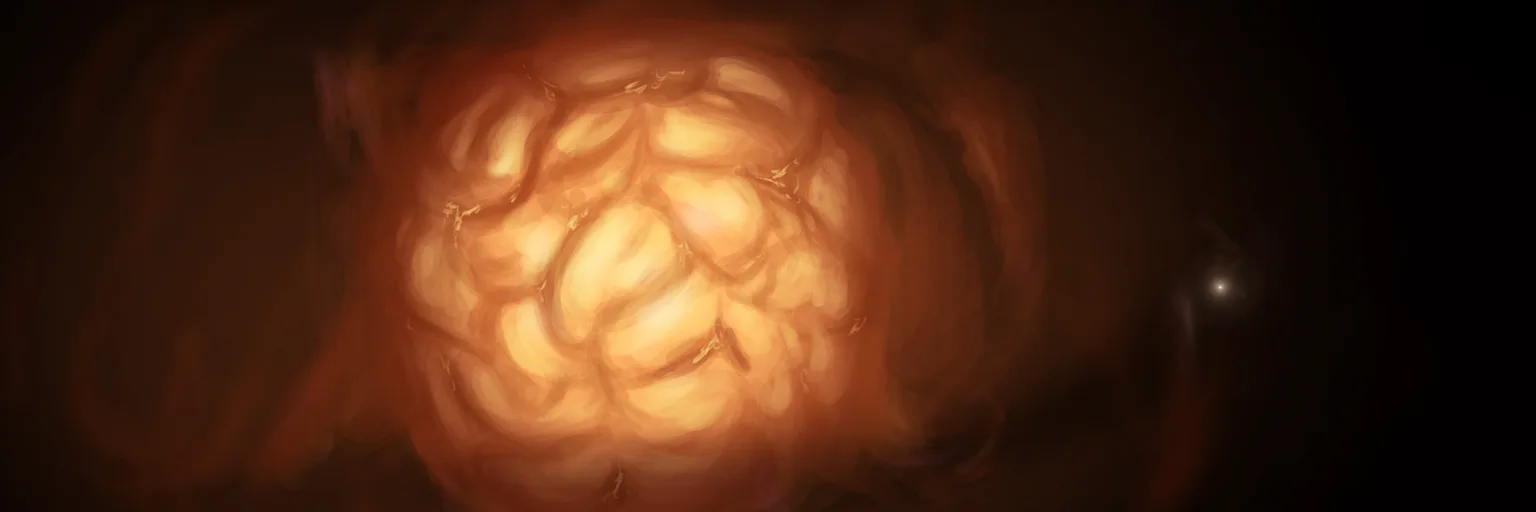
Betelgeuse calming down isn't an anticlimax: quiet is data too
After months of fading, the red supergiant has stopped sinking, for now. That's no letdown: each wobble of Betelgeuse is teaching us how little we knew about stars near the end of their lives.
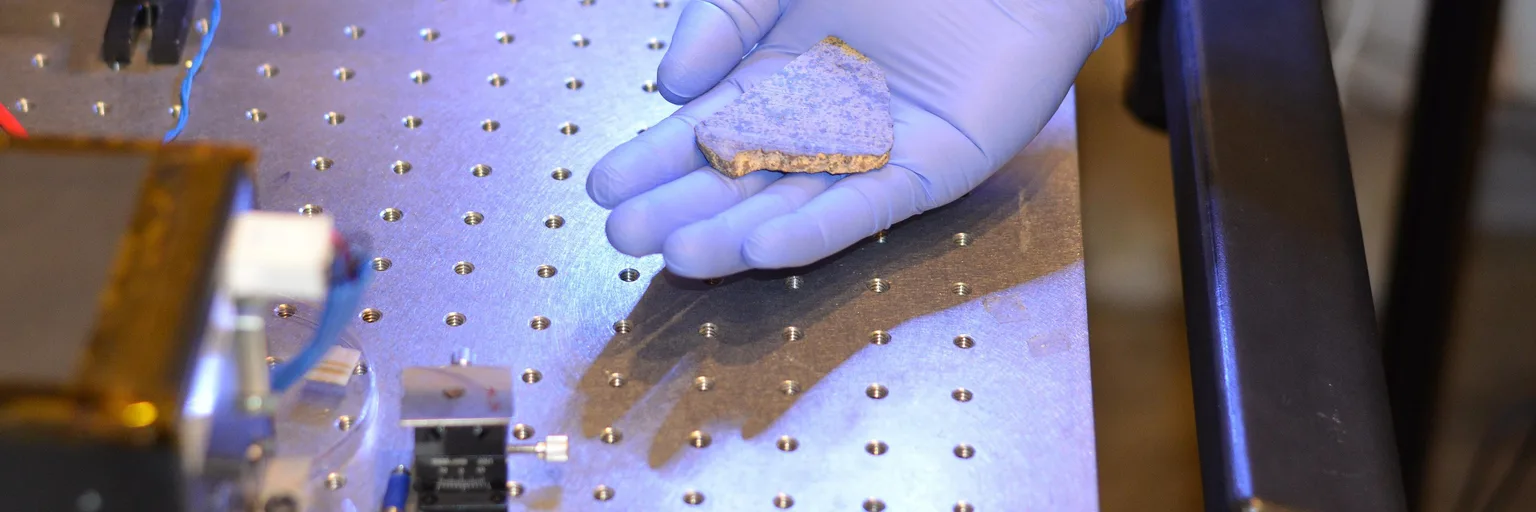
Teghaza 001 is a free Mars sample, and a reason to want more
A 4.1-billion-year-old rock from the Sahara shows how much meteorites can teach us about early Mars, and why that is an argument for sample return, not against it.
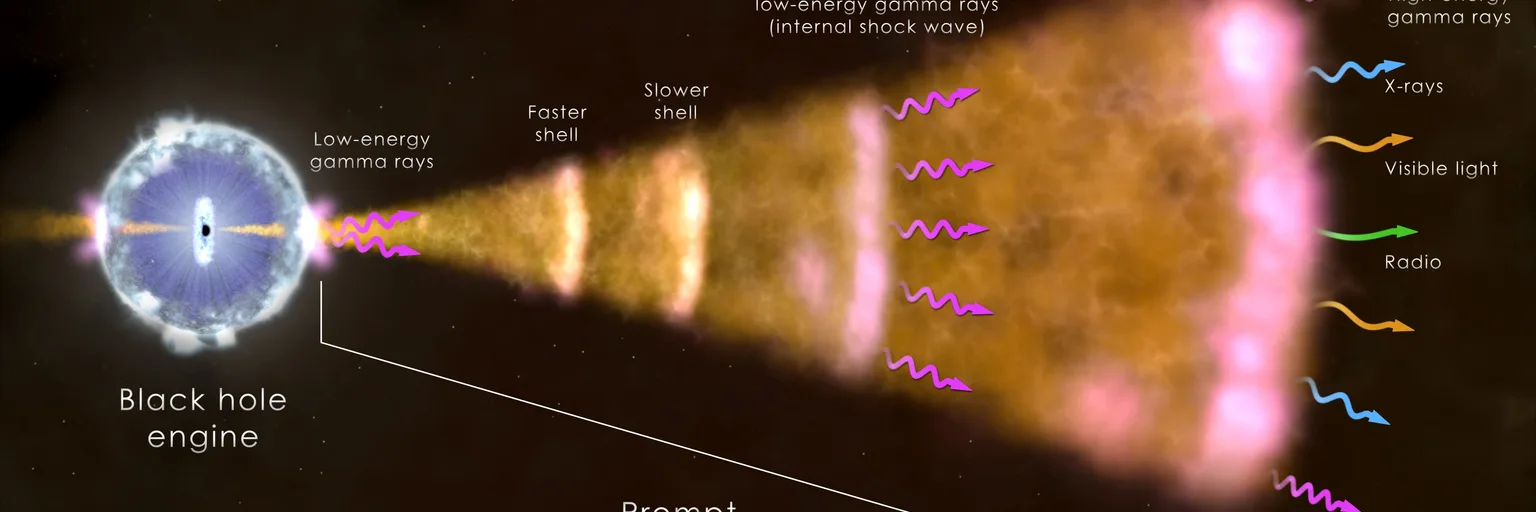
GRB 260310A shows why "modest" is a risky label for a cosmic blast
A gamma-ray burst that looked modest hid a far more energetic story in its afterglow. Brightness is a view from one angle, not a verdict on power.
Jupiter's bow shock shows Earth is a poor template for planets
Juno found multi-frequency plasma waves and shocklets at Jupiter that Earth doesn't need. We think that makes our home planet a risky default for magnetosphere models.