Artemis' Calculated Ascendancy: Why NASA's Patient Approach is Paying Off
After the Artemis II mission confirmed the Orion heat shield's robust performance and astronaut training intensified, NASA's deliberate, iterative strategy is clearly building a solid foundation for sustained lunar presence and deep-space exploration.
Photo: NASA Kennedy Space Center / NASA/Marie Reed / Wikimedia Commons (Public domain)
In an era often dominated by rapid-fire technological announcements and the race for firsts, NASA’s Artemis program might sometimes appear to move at a slower, more deliberate pace. Yet, this measured approach is precisely its strength. Recent developments, from the successful performance of the Artemis II heat shield to the rigorous astronaut training in simulated lunar environments, paint a clear picture: humanity’s return to the Moon is not about flash, but about foundational, meticulous engineering and preparation. We contend this calculated method is not just necessary for safety, but ultimately more impactful for sustainable deep-space exploration.
The past weeks have underscored this commitment. NASA confirmed the robust performance of the Artemis II mission’s heat shield, a critical component for crew safety during re-entry. Simultaneously, the Colorado Army National Guard has been actively partnering with NASA to immerse astronauts in realistic lunar landing training scenarios. These individual pieces of news, when viewed collectively, highlight a program committed to methodical progression rather than sensational sprints.
The Heat Shield's Silent Triumph
One of the most significant recent confirmations revolves around the Orion spacecraft’s heat shield, aptly named “Integrity” for the Artemis II mission. This component, tasked with protecting astronauts from temperatures reaching some 5,000 degrees Fahrenheit (2,800 degrees Celsius) as the capsule re-enters Earth’s atmosphere at nearly 35 times the speed of sound, performed as expected following its April 10 splashdown near San Diego, off the coast of California. This is a monumental achievement, especially considering the challenges encountered on the uncrewed Artemis I mission in late 2022.
After Artemis I, engineers discovered unexpected char loss and cracking in over 100 locations on the heat shield’s Avcoat material. This damage was attributed to a lack of permeability in the material during re-entry, which prevented gases generated by the ablation process from escaping, leading to pressure buildup. NASA’s Office of Inspector General had even highlighted this issue in a 2024 report, underscoring the risk it posed for future crewed missions.
Rather than delaying Artemis II by 18 months or more to replace the heat shield — which was identical to Artemis I’s and already installed — NASA opted for a different strategy. Extensive analysis, ground testing in arc jet facilities, and a modified re-entry trajectory were employed.
No topics yet: start the first one.
More stories
BioGravity-1: How Saudi Arabia's Space Mission Could Revolutionize Brain Research
The BioGravity-1 mission, launching the first biological samples from the Middle East into space, is a strategic move positioning Saudi Arabia at the forefront of understanding and treating neurodegenerative diseases.
Christina Koch's New Role: A Strategic Shift, Not a Setback, for Artemis
NASA's decision to move Artemis II astronaut Christina Koch into a key engineering leadership position signals a deliberate pivot towards foundational technical oversight and long-term mission architecture over an accelerated lunar landing timeline.

Artemis III's Stacking Milestone: A Crucial Preparatory Step, Not the Final Leap
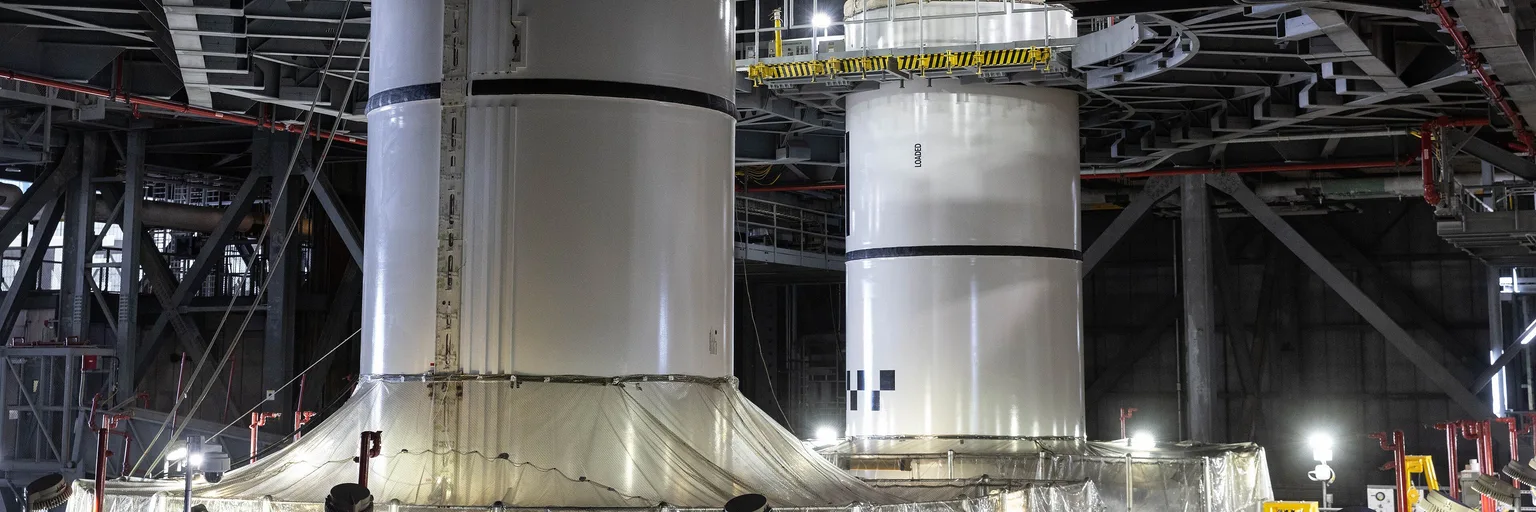
NASA's completion of Artemis III booster stacking marks a significant engineering milestone, signaling steady progress in the complex preparatory missions essential for future human lunar landings.
A Cosmic Phoenix: Rethinking Planetary Rebirth Around Dead Stars
A newly discovered exoplanet, formed from the ashes of its host star, challenges our most fundamental assumptions about how and where planets can emerge, opening new chapters in stellar archaeology.