Europe's Space Paradox: Autonomy or Irrelevance?
Despite advanced capabilities, Europe and Italy grapple with a critical choice: forge true strategic autonomy in space or risk being sidelined in a rapidly militarized and commercialized cosmic arena.
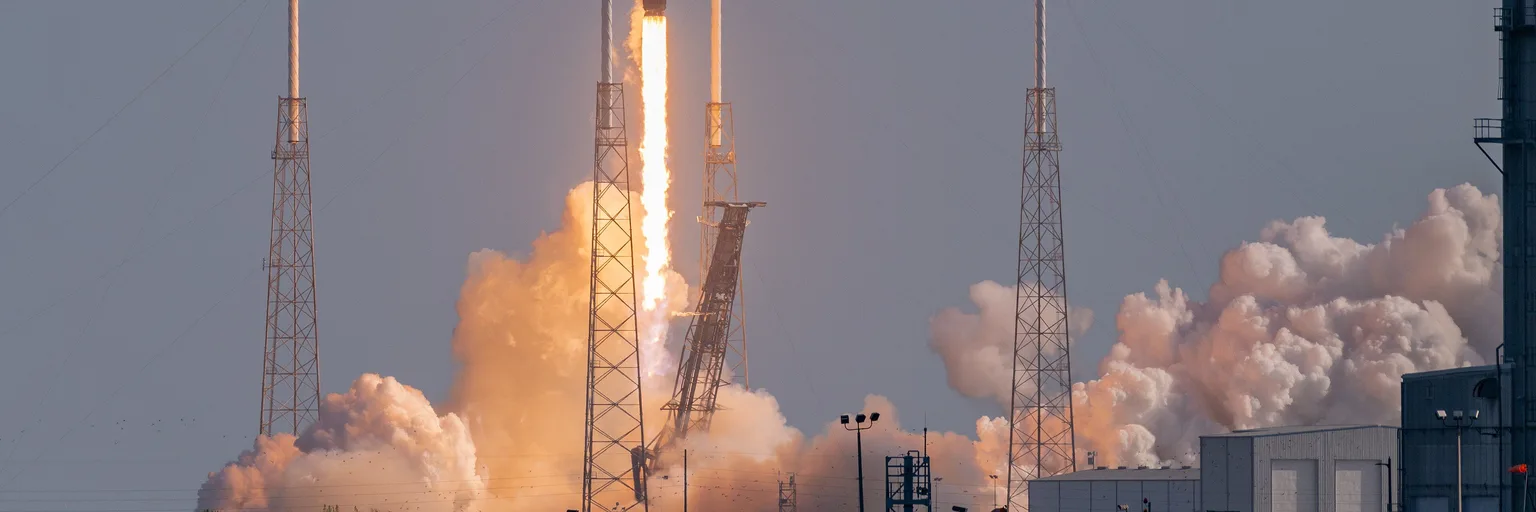
Photo: Bennett1203 / Wikimedia Commons (CC BY-SA 4.0)
Europe holds a curious position in the global space landscape. We possess the world's most precise satellite navigation system, Galileo, and the most advanced civilian Earth observation program, Copernicus. Yet, during a critical period, Europe found itself relying on companies like SpaceX for launches, a paradox that neatly encapsulates the continent's struggle for true strategic autonomy.
The challenge became starkly evident with the suspension of Soyuz launches from Kourou by Russia in February 2022, just two days after the invasion of Ukraine. With Ariane 5 retired in July 2023 and Vega C grounded after a failure in December 2022, Europe was left for a year without its own dedicated launcher. Even Italy's ambitious IRIDE Earth observation constellation saw some of its satellites launch from California on a shared SpaceX mission in March 2026. This period vividly demonstrated that geopolitical realities could present a bill before engineering ever did.
Today, the situation has seemingly reversed with Ariane 6 flying regularly. However, the paradox persists: a significant commercial client for Ariane 6 is the American firm Amazon Leo, which has commissioned 24 missions through 2031. This scenario paints a picture of technological excellence that has not yet translated into genuine strategic sovereignty, underscoring the pressing need for Europe to define its independent role in the cosmos.
The Costs of Fragmented Ambition
Europe’s space ecosystem, while boasting remarkable achievements, is structured in a way that inherently limits its strategic independence. The European Space Agency (ESA), an intergovernmental organization with 23 member states including non-EU countries like the UK, Switzerland, and Norway, operates on a unique funding model. Members contribute an obligatory quota proportional to their GDP, funding science and basic activities, and an optional 'à la carte' contribution for launchers, exploration, or telecommunications. This system, which saw a record 22.3 billion euros in commitments at the Bremen Ministerial Council in November 2025 – with Italy contributing 3.5 billion euros, ranking third – also adheres to the 'juste retour' principle: countries receive industrial contracts proportionate to their financial input. While this encourages investment, it also tends to fragment supply chains, hindering a truly unified European industrial strategy.
Beyond ESA, the European Union itself plays a crucial role. Since the Treaty of Lisbon, the EU finances and owns major public space infrastructures such as Galileo and EGNOS for navigation, and Copernicus for Earth observation, as well as secure governmental communications. The EU manages these through EUSPA, the Prague-based agency that has been providing Galileo and EGNOS services since 2021. Galileo, for example, exemplifies this layered approach: the Union owns it, ESA developed the satellites, and EUSPA ensures the service reaches users. Significantly, one of Galileo's two control centers is located in Fucino, Italy. Furthermore, Galileo is not purely civilian; it transmits an encrypted signal reserved for governments, designed to resist interference – a critical capability in a context where interference affecting civilian aircraft and ships across Europe is increasingly attributed to Russia.
National governments form the third tier of this complex structure. In Italy, for instance, the Prime Minister's Office (Palazzo Chigi) directs space policy, with the COMINT interministerial committee setting guidelines. The Italian Space Agency (ASI), established in 1988, acts as the operational arm, managing national programs, representing Italy in ESA, and administering facilities like the Luigi Broglio Space Center in Kenya. Recent Italian legislative initiatives, such as the Space Economy Law (no. 89 of 2025) and the National Space Policy Strategic Document (approved May 14, 2026), aim to formalize authorization for orbital operations and establish dedicated funds, showcasing a concerted effort to strengthen national capabilities.
The Dual Dilemma: Autonomy and Scale
Europe faces a dual dilemma. The first is balancing autonomy, alliances, and market forces. Building sovereign capabilities is expensive, relying on the United States is convenient as long as interests align, and purchasing from the commercial market is cost-effective until the provider becomes a political actor, a lesson Ukraine learned with Starlink. This vulnerability was highlighted when NASA decided to pause the Gateway lunar station project in March 2026, redirecting focus to a surface base and leaving European contributions, largely from Thales Alenia Space in Turin, without a defined role. This demonstrates how years of European work can be re-evaluated by decisions made elsewhere.
The second dilemma is one of scale. No single European country can achieve full strategic autonomy alone. Minister Adolfo Urso, Italy's delegate for space policies, emphasized at the International Space Summit in Paris in September 2026 that Europe must enhance its industrial capacity and consolidate its supply chains. This requires moving beyond internal competition and fostering European champions capable of competing globally. Italy, for its part, has committed over 10 billion euros to the sector through 2028, aiming to strengthen its position in launchers like Vega C and in satellite constellations, as exemplified by the Bromo project with Germany and France. This project aims to create a European industrial entity capable of ensuring strategic autonomy.
The Path to Strategic Relevance
The landscape of space has irrevocably shifted from a domain of purely scientific cooperation to a theater of strategic competition and potential military confrontation. Italy's government recognized this transformation in January 2025, integrating industrial development with security in its space policy. The need for a European satellite constellation for institutional and defense communications is paramount, as highlighted by Minister Urso, who spoke of a national constellation being developed in partnership with other European and Western actors. This initiative, alongside the focus on the cislunar space – the region between Earth and the Moon – as a new key area for technological, industrial, and geopolitical balance, underscores Europe's evolving approach.
While Europe strives for industrial and technological sovereignty in critical areas like launchers and satellite infrastructures, leaders like Urso stress the importance of maintaining strong transatlantic ties, particularly for complex exploration missions with NASA. The International Space Summit in Paris, which saw Arianespace secure new launch agreements for Ariane 6, including six more missions for Amazon Leo, confirmed the launcher's dual role: ensuring autonomous access to space while competing commercially. Ultimately, Europe's strategic autonomy in space will hinge on its ability to overcome internal fragmentation, boost its industrial scale, and strategically navigate both alliances and competition in this increasingly vital domain.
No topics yet: start the first one.
More stories
SpaceX's Starlink Mobile: A Game Changer, But Not a Monopoly
The FCC's approval for SpaceX's 15,000 direct-to-device satellites heralds a new era for connectivity, yet market reactions and industry complexities suggest a nuanced future for the space and telecom sectors.
Mars' 'impossible cloud' rewrites the rules of planetary atmospheres
A Spanish-led team has deciphered the mystery of Mars' 1,800-kilometer cloud, revealing a never-before-seen atmospheric process that challenges our understanding of other worlds.

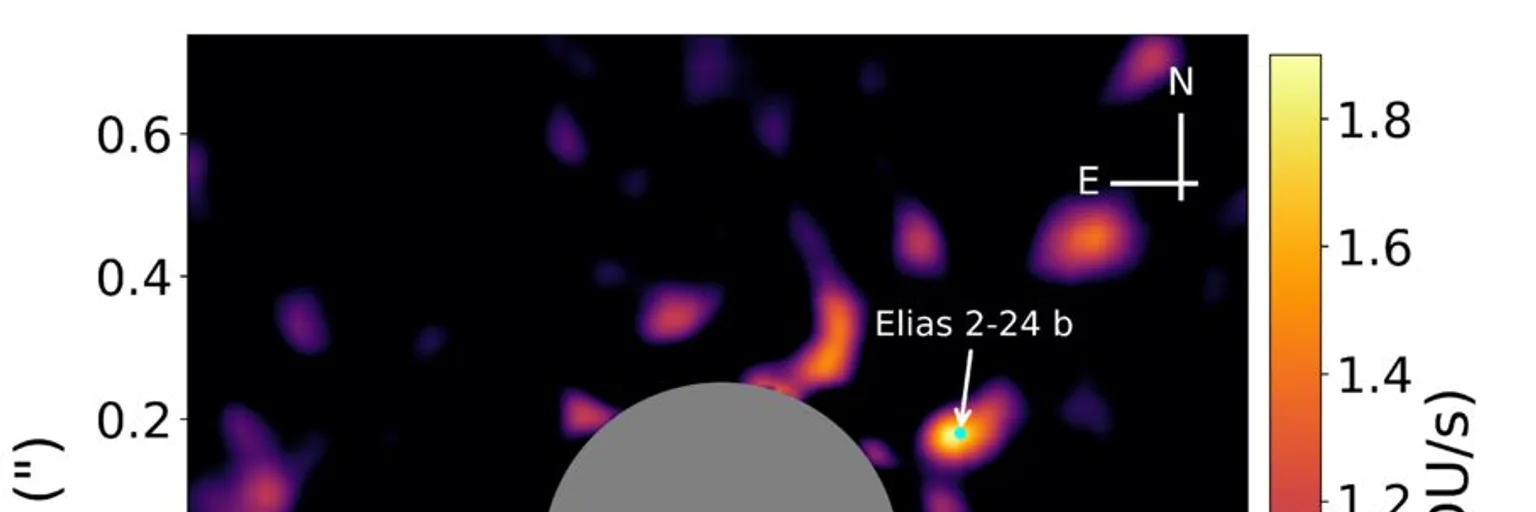
Elias 2-24 b: The Cosmic Infant Rewriting Planet Formation
The discovery of Elias 2-24 b, the youngest exoplanet ever found, provides an unprecedented window into the early universe, compelling astrophysicists to reconsider established models of how giant planets rapidly come into being.
Sputnik's Beep: How a Simple Satellite Redefined Humanity's Cosmic Edge
More than just a technological marvel, Sputnik 1's iconic signal didn't merely open the Space Age; it made the boundary between Earth and space a tangible, contested frontier.