NASA's new astronaut call is a test of whether the Moon base is real
NASA is recruiting again, and the pitch is about people who can live and work on the Moon, so the next class will show whether the plans are serious.
Photo: NASA / Wikimedia Commons (Public domain)
Is a job ad a better indicator of space policy than a budget slide? Sometimes, yes. Rockets can slip for years without anyone noticing, but you can't recruit people for a job that doesn't exist, at least not without some embarrassment later. That is why NASA's new astronaut call deserves more attention than the usual "apply now" headline.
The facts are short. According to Space.com, NASA put out the call on Saturday, November 7, and applications close on December 3. As German outlet t-online reports, applicants must be U.S. citizens with a master's degree in a science-related field or similar, plus at least three years of professional experience or at least 750 hours of flight training. They also need to pass a fitness test and demonstrate strong leadership, teamwork and communication skills. Selection is planned for autumn 2027.
The jet-pilot era is fading from the pitch
Look at the requirements: a master's degree is the first filter, and flight hours are only one alternative to work experience. Our reading is that the old hero archetype is no longer the center of gravity. The agency's campaign video, titled "The Universe is Calling", stresses that there is no typical astronaut. It's marketing, sure, but marketing reveals what a recruiter is afraid of not finding.
We shouldn't overstate this. Nothing in the published requirements excludes pilots, and 750 flight-training hours still count. What changes is the weighting. A lunar surface crew will probably spend less time flying and more time maintaining systems, doing fieldwork and solving problems far from help. NASA chief Jared Isaacman, in the wording reported by dpa, said the people selected could walk on the Moon, live and work on a Moon base and help develop systems and operations that will one day take entire teams to Mars. Notice the verbs: live, work, develop. Nobody says "pilot".
The scarcity of seats is the real story
Here is the number that matters to us. The last round drew roughly 8,000 applications, and ten candidates were chosen; they are still going through about two years of training. NASA has around 30 active astronauts, according to dpa reporting, and about 370 selected in its entire history. Bild puts the active figure at 32, so the exact count is fuzzy.
A class of ten is a trickle. If the agency really expects crews rotating through a lunar base while also staffing the International Space Station and preparing for Mars, the pipeline looks thin. Maybe this call will produce a bigger class; nothing published so far says. It is the first thing to watch in 2027: how many names are announced. A class of ten would suggest cautious ambition. A markedly larger one would be a genuine signal that bases are being planned for real.
What the selection will tell us
Be careful with enthusiasm. One outlet, Tech Times, already describes this as the first class recruited to staff a permanent Moon base at the lunar south pole. That is a headline's framing, and the agency's own words, as reported, are more hedged: those selected could walk on the Moon, and systems would one day take teams to Mars. A recruitment drive is a promise of opportunity, not of a base.
Still, a hiring call is a commitment of a different kind. Training takes about two years, so people picked in autumn 2027 would only be ready later, which implies NASA expects flights to need them. If Artemis slides further, they will probably end up on the ISS or on the ground, and that would tell us as much as any launch date.
Our verdict: read the class, not the slogans. Watch its size, how many scientists and engineers it contains compared with test pilots, and whether the training described matches surface work rather than just orbital flight. If those three line up, the Moon-base talk is credible. If not, "The Universe is Calling" is just a very good video.
Non-U.S. readers have little to do here: the call is closed to them, and dpa notes that Europeans can look to ESA instead.
No topics yet: start the first one.
More stories
Voyager 1's light-day is a milestone of stamina, not of distance
Reaching one light-day is a nice number, but the real story is a plutonium-powered probe shedding instruments to stay alive, and the question of what comes next.

Artemis II's GPS glitch is a warning, not a curiosity
A rocket punched holes in the ionosphere and may have skewed GPS by meters. With more launches coming, we should measure that effect, not file it under trivia.
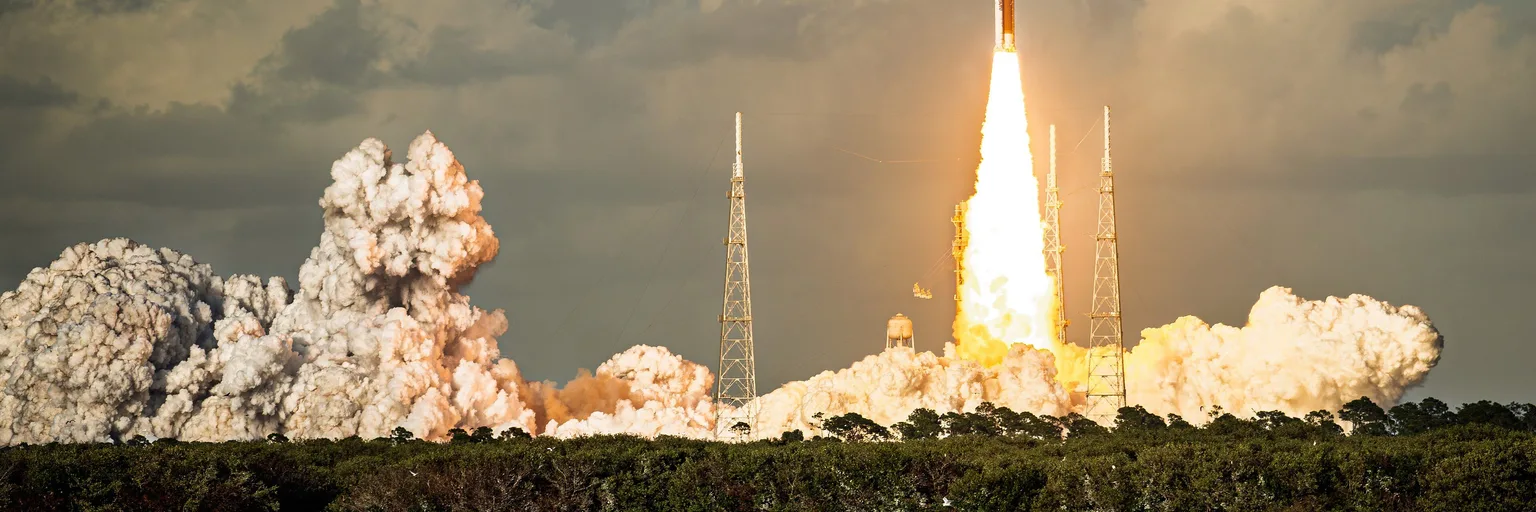
The Starship double catch matters for cadence, not for the show
Snagging both Starship stages with tower arms would be thrilling to watch, but the real prize is shorter turnaround and lower cost per flight, and that is slower to prove.

Nitrogen on Mars is a necessary ingredient, not evidence of life
Curiosity's detection of usable nitrogen strengthens the case that ancient Mars was habitable, but a pantry stocked with chemistry tells us nothing about whether anyone cooked.