Two brains in one skull? Treat it as a story about origins
A Stanford-led study says the brain grows from two distinct cell lineages. It's a fascinating hypothesis about evolution, not a reason to tear up how we understand the brain.
Is the human brain one organ, or two organs that ended up sharing a skull? The headline is irresistible, and it has been making the rounds in the press since the study appeared in September. But a good headline is not the same thing as a good conclusion, and this one needs some careful unpacking.
What the study actually claims
According to Época Negócios, a study led by Stanford Medicine researchers and published in Nature Neuroscience argues that the brain is the union of two distinct organs that evolved independently over hundreds of millions of years. The classic view, as Revista Galileu describes it, is that the brain develops as a single organ from a common progenitor cell.
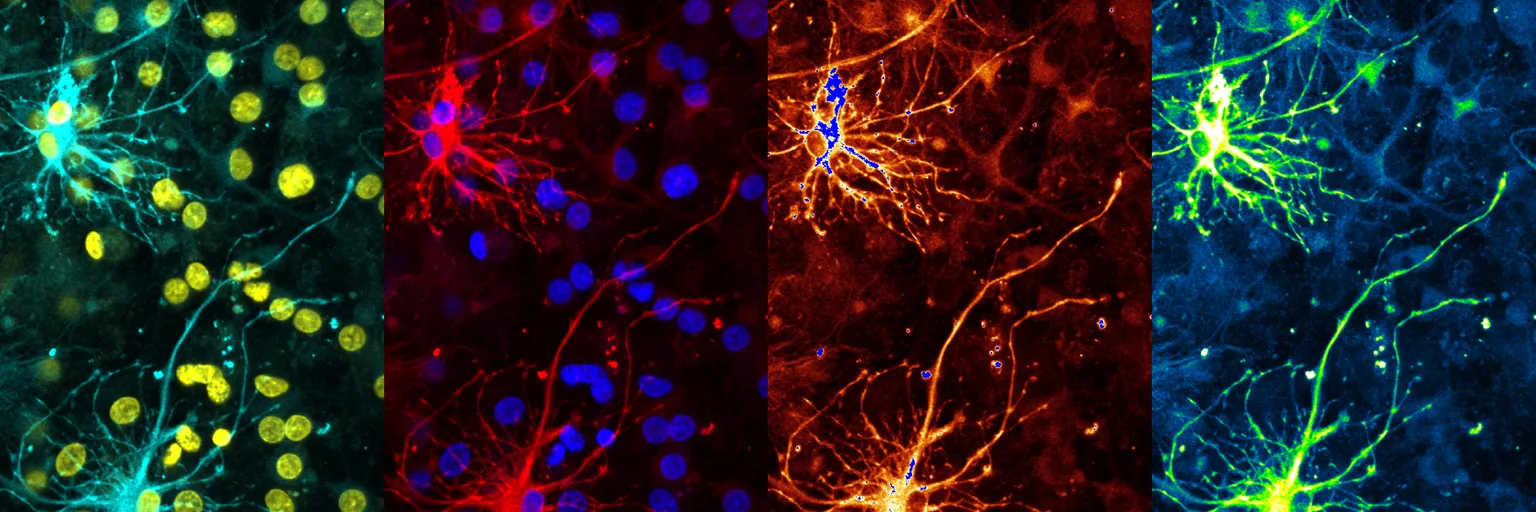
The reported detail is more modest than the headline. As Último Segundo summarizes it, the researchers identified two groups of cells that would give rise to different parts of the nervous system. One shows activity of the gene Otx2 and is tied to the forebrain and midbrain. The other shows activity of Gbx2 and is tied to the hindbrain.
"Two lineages" is not "two organs"
Notice the slide in vocabulary. What the data seem to describe is two developmental lineages, meaning two families of cells with different genetic signatures and different destinations. Calling each of them an "organ" is an interpretive leap. It is a vivid metaphor, and metaphors sell articles, but in our view it should not be mistaken for a measurement.
The coverage itself contains the brake. Viva reports that neurologists consulted about the research say the finding does not change the view of the brain as a single organ, while still valuing it for understanding cell development. That is the sensible reading. An organ is defined by how it works, how it is wired and how it fails, not only by the family tree of its cells. Whatever the origin of the cells in your cortex and your brainstem, we have no reason to think they are any less part of one working system.
Also worth keeping in mind: the coverage we reviewed is mostly secondary press in Portuguese. We can't judge the study's methods, its sample, or how strongly its authors word their own claims. Anyone tempted to rewrite a neuroscience textbook should read the paper first, and so should the journalists writing the headlines.
Where the idea is genuinely interesting
The more exciting part is evolutionary. Super Abril frames the proposal as two organs that may have evolved in parallel over millions of years and ended up squeezed into the same cavity. If that holds up, it offers a new way to ask why some brain regions are so deeply integrated while others seem to follow their own logic. That is a productive question, and we would welcome more work on it.
But this is a hypothesis about origins, and origins are famously hard to verify. Reconstructing events across hundreds of millions of years leans on inference, and different teams may read the same genes differently. Independent replication, ideally from groups with no stake in the original claim, will matter far more than any press coverage, including this column.
Our verdict
Read it as a clever new map of where the brain's parts come from, not as proof that you carry two brains. For readers, the practical advice is simple: be wary of any headline that turns "two cell lineages" into "two organs," and wait for other labs to weigh in. For the field, the win is a sharper question about development and evolution. We think the brain remains one organ in every sense that matters for medicine and daily life. It may just have a more complicated family history than we thought.
No topics yet: start the first one.
More stories
The brain's 15-a-second flicker is a clue about perception, not a verdict on you
A preprint says the brain alternates between conscious and suppressed signals about 15 times a second. Fascinating, yes, but it doesn't mean you are half-unconscious.
Fast crows aren't smarter than us: they're a different design
Crows decided twice as fast as humans and monkeys in a lab test. That says less about who is smarter than about how many ways evolution can build a thinking brain.
The phantom lighthouse isn't a glitch: it's how your brain sees
A beam of light that isn't there, reported since 1937, has been rebuilt in virtual reality, and we think it shows perception is a best guess that we can now test.
One neuron doing math should kill the "simple switch" model
A Chinese Science study says single neurons can compare rules with sensory input. The real lesson is about biology's textbook model, not about brain-like machines.