Human Eyes Still See What Machines Miss: Artemis II Proves It
NASA's Artemis II mission delivered a treasure trove of data, but it's the astronauts' unique observations of lunar impacts and strange colors that underscore humanity's indispensable role in space science.
Photo: NASA / Wikimedia Commons (Public domain)
For decades, the Moon has been depicted in popular culture and scientific imagery as a monochrome sphere, a desolate canvas of grays and whites. Yet, the recent scientific reports from NASA’s Artemis II mission challenge this simplistic view, revealing a lunar surface dappled with unexpected hues and a sky punctuated by faint, fleeting flashes. What the four astronauts—Reid Wiseman, Victor Glover, Christina Koch, and Jeremy Hansen—witnessed and meticulously documented during their ten-day journey in April 2026 not only broadens our understanding of Earth's nearest neighbor but also emphatically argues for the irreplaceable value of human perception in scientific exploration, even as NASA makes an unprecedented volume of mission data available for global scrutiny.
After launching atop NASA's Space Launch System (SLS) on April 1, 2026, the Artemis II crew embarked on a journey that took them around the Moon. This mission, a crucial stepping stone towards establishing a long-term human presence on the lunar surface, provided the first opportunity for human observation and data gathering in lunar space since the Apollo era. Upon their return, NASA released the preliminary findings in reports such as the “Artemis II Preliminary Lunar Science Report,” alongside a staggering data dump of more than 800 gigabytes, including images, audio, and astronaut annotations, now accessible to scientists and the public through NASA's Planetary Data System.
The Unseen Revealed by Human Eyes
One of the most compelling revelations from the Artemis II mission is the astronauts' direct observation of five meteor impacts on the Moon’s dark side. These flashes, described as “pinpricks” of light and likely the faintest ever seen by the unaided human eye, occurred during a 54-minute total solar eclipse as the Orion spacecraft passed behind the Moon on April 6. While ground-based telescopes have logged hundreds of lunar impacts since 1999, these particular events were uniquely perceived by the crew. As Mashable reports, mission scientists were genuinely surprised by the sightings, underscoring that even highly trained observation teams on Earth can miss what eyes in orbit might catch. These meteors, estimated to be no more than a few centimeters in diameter, generated enough kinetic energy to be visible, offering critical data for assessing long-term risks to future lunar habitats.
Beyond the transient flashes, the astronauts also painted a vibrant new portrait of the Moon's geology. They reported seeing
No topics yet: start the first one.
More stories
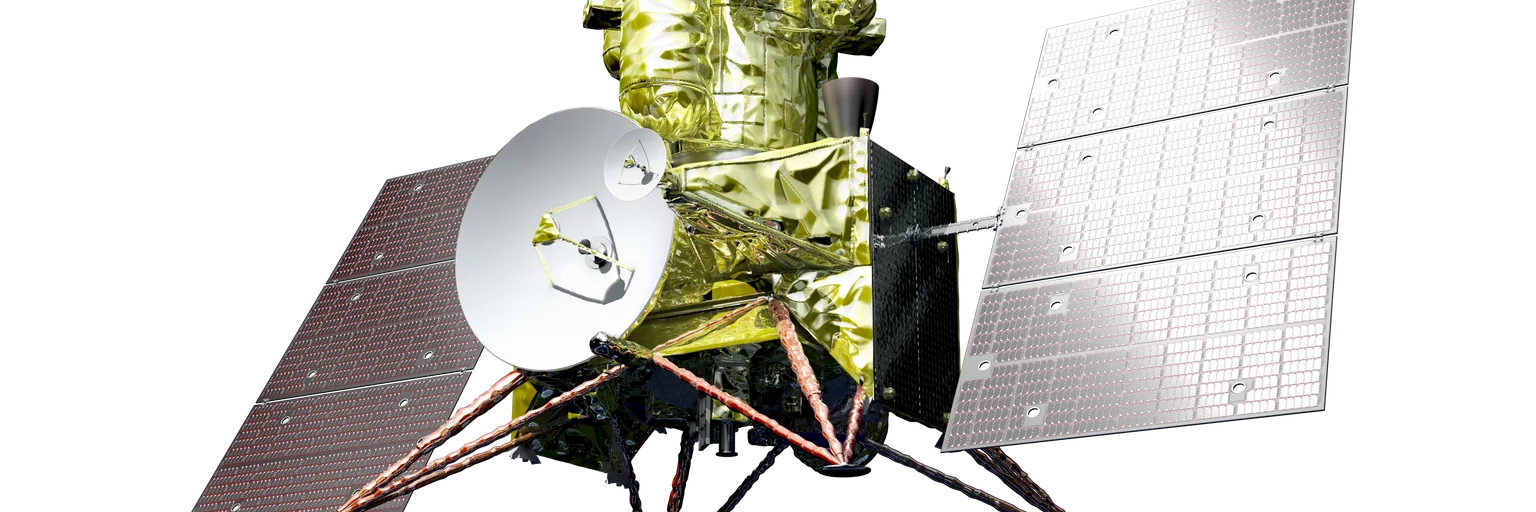
Mars' Moons Hold Solar System's Secrets: MMX Mission Ready to Deliver
The upcoming MMX mission, a collaboration between Japan, France, and other nations, is poised to solve the enduring mystery of Mars' moons and offer unprecedented insights into our solar system's tumultuous early days.
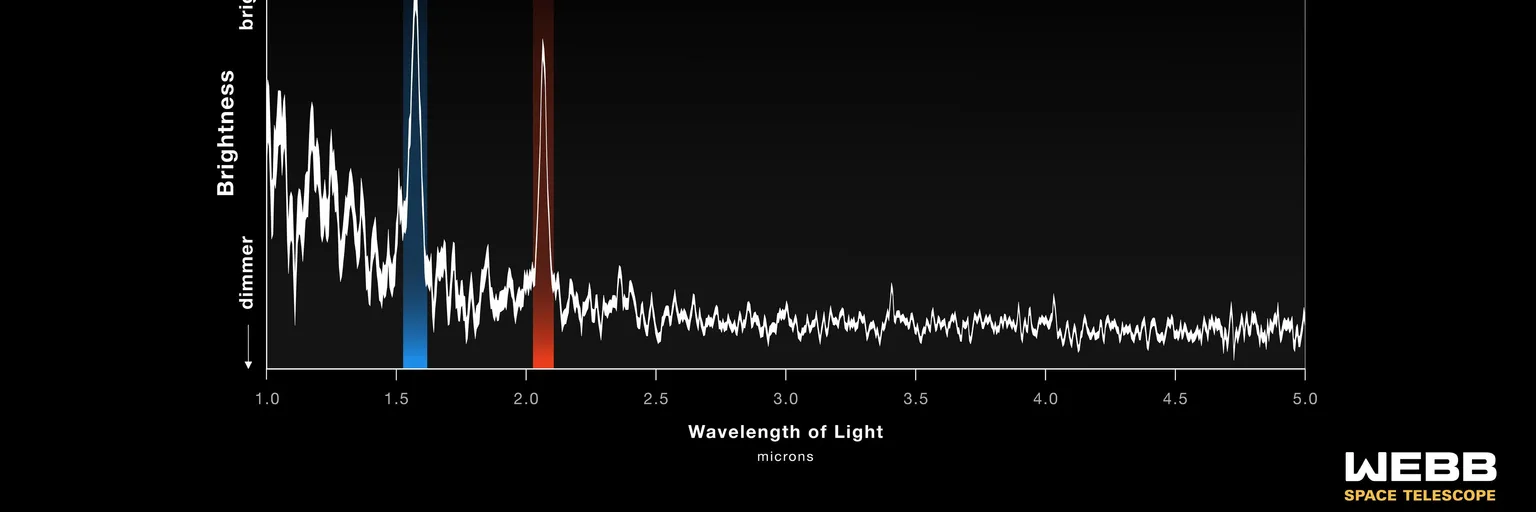
The Universe’s Oldest Fast Radio Burst Challenges Its Origins
The discovery of the most distant Fast Radio Burst, detected by MeerKAT and pinpointed by the James Webb Space Telescope, provides unprecedented insights, forcing us to rethink how these enigmatic signals originate in the early universe.
Cosmic Alchemy's Crucible: X-rays Reinforce Gold's Violent Birth
A distant flash of X-rays from colliding neutron stars offers compelling new evidence, deepening our understanding of how precious metals like gold are forged in cataclysmic cosmic events.

Beyond Footprints: Nuclear Power and Lunar Caves Pave the Way for Permanent Space Presence
NASA's dual push for advanced nuclear propulsion and the discovery of lunar lava tubes signals a profound strategic pivot towards enabling long-term, self-sustaining human outposts on the Moon and Mars.