The Eyeless Cave Snail Shows Evolution Has No Standard Design
Erhaia dijiang did not become strange for its own sake: in darkness, isolation and scarcity, sight became expendable—and its tiny habitat became precious.
Photo: Uttaragarg / Wikimedia Commons (CC BY-SA 4.0)
What does an animal lose when the world offers no light? In the case of Erhaia dijiang, a newly described freshwater snail from a Chinese mountain cave, the answer is its eyes—and perhaps nearly its margin for survival.
The species was found in Yuxi City, Yunnan Province, during fieldwork in August 2025 and formally described in Subterranean Biology. It is the first freshwater cave snail documented in China, according to ScienceDaily’s account of the study. The snail lives at an elevation of 2,062 meters, in shallow water among gravel and broken rock, close to the cave entrance.
Its anatomy is striking: no eyes, a nearly transparent cone-shaped shell, an unpigmented body and long, slender tentacles. But the real story is not that nature has produced a “ghostly” animal. It is that evolution has no obligation to preserve a familiar body plan when the environment stops rewarding it.
In permanent darkness, eyes become an expensive idea
Eyes are often treated as proof of sophistication, as if seeing were an automatic upgrade in the animal world. That is a human-centered assumption. For an organism living in complete darkness, maintaining visual structures may offer little or no benefit. Over generations, traits that consume biological resources without improving survival can be reduced or lost.
That appears to be the logic behind Erhaia dijiang. The researchers describe its ocular structures as fully degenerated, while laboratory observations found that the snails consistently withdrew into dark spaces beneath rocks when exposed to light. The result is not a defective surface snail. It is a specialized cave animal whose anatomy has been redirected toward a different set of demands.
The same pattern is visible in its lack of pigmentation and translucent shell. Those features make little sense as protection from sunlight because sunlight is absent from its habitat. They make more sense as signs that the cave has removed pressures common in surface environments. The animal is not “unfinished.” It is fitted to a narrower world.
That distinction matters because evolution is frequently described as a ladder, with complexity at the top and loss treated as decline. Cave life is a useful correction. Evolution is less like engineering toward a universal ideal and more like repeated negotiation with local conditions. If a feature no longer pays its way, natural selection can favor its disappearance.
The snail’s record is also a warning about isolation
The discovery is notable not only for the animal’s anatomy. The cave represents a tightly bounded biological system. Erhaia dijiang was found in water less than one meter deep, where temperatures remain close to 20°C, and researchers did not find it in nearby surface streams. Even when seasonal rains flushed some snails toward the cave outlet, the animals remained associated with the underground habitat and within two meters of its entrance.
That restricted range is fascinating from an evolutionary perspective. Isolation can allow a population to follow its own biological path, producing traits unlikely to arise in a more connected environment. The cave becomes a natural experiment in separation: darkness, stable water and limited exchange with the surface create conditions under which specialization can accumulate.
But isolation is also a conservation trap. A species spread across many habitats may have some chance of surviving a local disturbance. A species confined to one cave has far fewer alternatives. The same boundary that protects it from competition can leave it exposed to changes in water quality, flow or the physical structure of the cave.
The available evidence is especially sobering. During the initial survey, scientists found only three living adults and one empty shell, with no juveniles observed. The research team described the species’ conservation outlook as “far from optimistic,” as Phys.org reports. That observation does not, by itself, establish the total population or prove that the species is failing to reproduce. It does show how little is currently known—and how narrow the known evidence base is.
The biggest threat may be what we have not yet noticed
There is a temptation to treat a newly named species as newly created. In reality, the snail was almost certainly present before scientists described it. The novelty belongs to human knowledge, not necessarily to the animal. That is why this discovery should be read as an argument for exploration, not merely as a curiosity from an exotic cave.
The researchers are calling for broader surveys of Chinese cave ecosystems and for conservation measures to be developed quickly. We think that is the most important part of the story. Finding one eyeless snail is scientifically rewarding; recognizing that underground freshwater habitats remain poorly studied is the more consequential result.
Caves are easy to overlook precisely because their biodiversity is hidden. Their ecosystems can also be difficult to inspect without disturbing them, and the animals living there may be too localized to recover once their conditions change. A lack of sightings should not be confused with a lack of life—or with proof that a habitat is unimportant.
The best lesson from Erhaia dijiang is therefore twofold. Evolution does not design toward a standard template: in the right environment, losing eyes can be an adaptation. And conservation cannot protect what it has not bothered to find. This snail is not interesting because it looks bizarre. It is interesting because its strangeness is a map of the pressures that shaped it—and a reminder that the map may be erased before we finish drawing it.
No topics yet: start the first one.
More stories
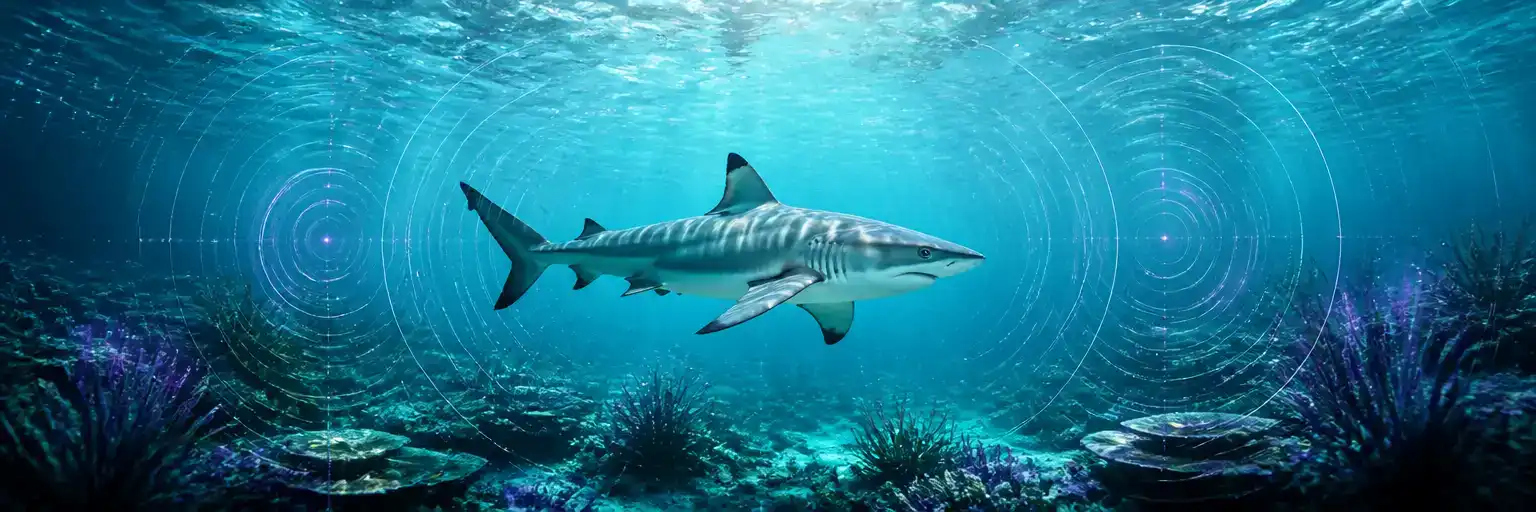
Sharks Don’t Just Sense the Ocean—They Listen to Its Map
Blacktip sharks detected low-frequency sounds from up to 74 meters away in the wild, exposing both a hidden sense and a neglected risk of ocean noise.
Plastic-to-levodopa is clever biology, not circularity solved
Engineered bacteria can turn PET-derived chemicals into L-DOPA, but the breakthrough still has to prove its cost, safety and scale before it becomes circular manufacturing.
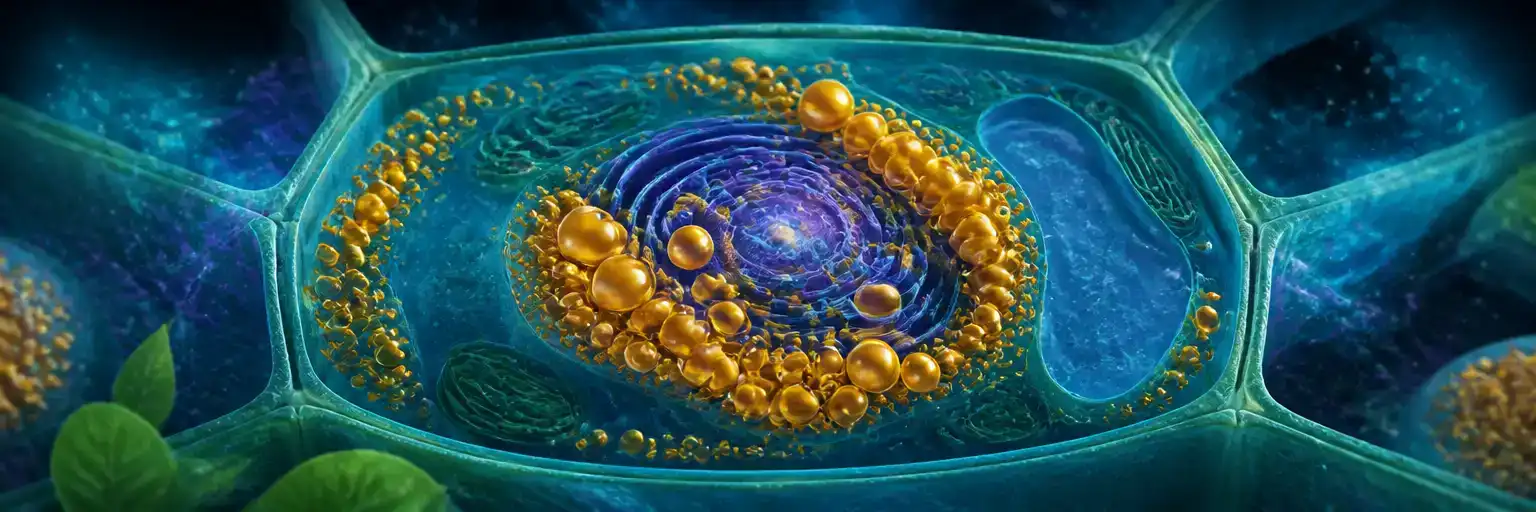
Plant viruses have a lipid problem—and resistance may start there
A study of Turnip mosaic virus shows how it hijacks plant lipid droplets, revealing a vulnerable part of infection without promising an instant agricultural cure.
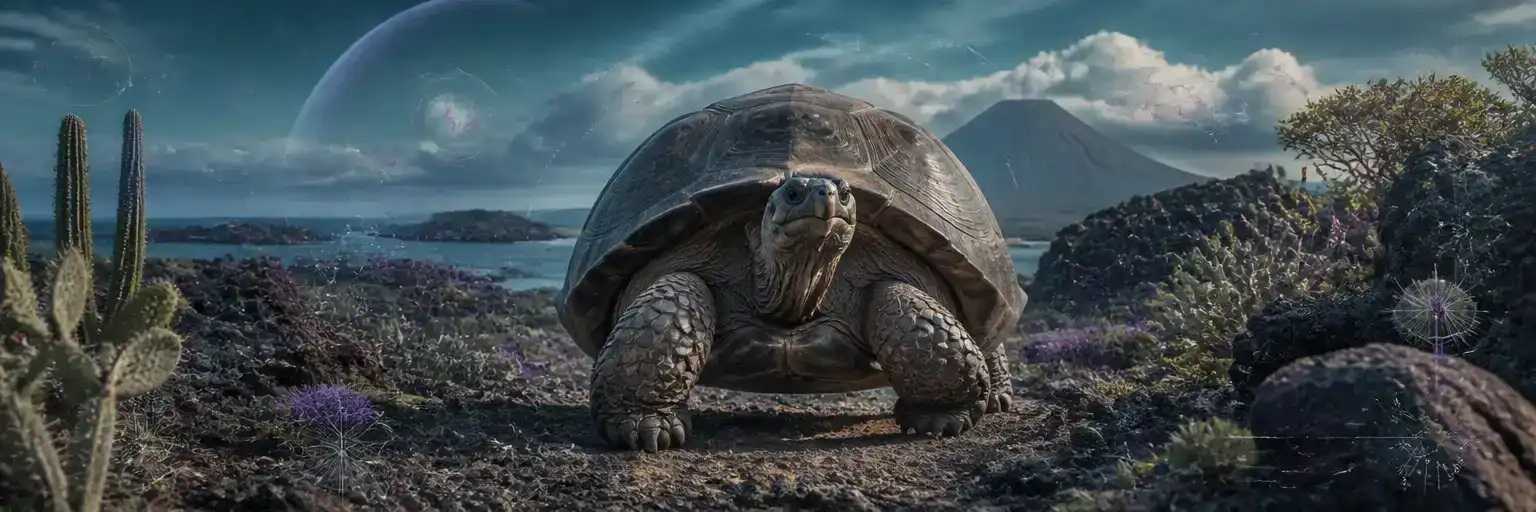
Fernanda's Return: A Second Chance for Conservation
The rediscovery of the Fernandina giant tortoise, long thought extinct, is a powerful reminder of nature's resilience and the critical importance of persistent conservation efforts in unexpected places.