The 8 km "fault" in an eclipse record is a map error, not geology
A 2,700-year-old Chinese eclipse now fits modern science after a small location correction. It's a fine win for treating old texts as data, and a poor basis for trusting every ancient date.
Can a single misplaced dot on a map rescue a 2,700-year-old observation? Apparently so. And the story is more interesting once you notice that the headline going around is slightly off.
The Spanish-language coverage, such as Xataka's report, speaks of a "fallo" of 8 km in a Chinese city. Read that as "error", not as a geological fault. Other outlets describe an eight-kilometer mistake and a misplaced ancient city, and nothing in the material we reviewed mentions seismic geology at all. So the neat idea that geology validated an old text doesn't hold up. What did the validating was historical geography combined with eclipse calculation.
What actually happened: a record got a better address
According to ScienceDaily, observers at the court of the Lu Duchy witnessed a total solar eclipse on July 17, 709 BCE. Sky at Night calls it the earliest datable record of a total solar eclipse known. An international team from Japan, the United Kingdom and the United States reanalyzed it, and SciTechDaily says it combined historical geography with the astronomy. By our reading, the logic is simple: whether an eclipse looks total depends on where you stand, so putting the observers in the wrong place can make a true account look false.
That is the part we find persuasive. The text didn't need to be rescued with special pleading. It needed its coordinates fixed, and then it agreed with the physics. The researchers say this let them extract precise figures on Earth's rotation in the 8th century BCE. They also found an independent correlation with solar activity models built from tree rings, according to La Brújula Verde.
Old texts are data, and the best ones carry their own checks
We think the real lesson is methodological. A certain skepticism has long treated ancient chronicles as literature: useful for flavor, unreliable for numbers. Here the chronicle turned out to contain a measurable event, with a date and a description of the corona. The Debrief notes that the team analyzed corona descriptions to test a recently developed reconstruction of the solar cycle back to the 8th century BCE. A scribe who had no idea he was contributing to astrophysics ended up as a data point.
The opposite error is just as tempting, though. Imagine an 8 km mistake sitting quietly in the record. It shows how fragile the chain is between a line of ancient text, a modern place name and a calculation. Each link can be wrong without anyone noticing, and the failure looks like "the ancients got it wrong" when it may be "we looked in the wrong spot".
One good match is not a verified chronology
Here is where we'd pump the brakes. A single eclipse matching is a strong result for that eclipse. It says little about the many other records, plenty of them vaguer, copied across centuries, or written down for political and ritual reasons. The matching also works partly because eclipses are rare, datable and calculable. Most historical claims offer no such luxury.
There is also a quieter risk: success invites hindsight. Once a record fits, it's easy to read earlier doubts as foolish. But a fit after a correction is only convincing if the correction was justified on independent grounds, rather than chosen because it produced the desired answer. The sources we have are summaries and press-style write-ups, so we can't judge how tightly the team ruled out alternatives. We'd want to read the full paper before leaning on the details, especially the rotation figures.
Our verdict: celebrate the method, not the sweeping version of it. Treat ancient texts as data, which means treating them as data with error bars, transcription problems and geography that needs checking. The 709 BCE eclipse is a good template for how to do that. It isn't a license to declare an entire ancient chronology settled. When the next "history confirmed by science" headline arrives, ask the question this one answers well: what exactly was checked, against what, and by whom?
No topics yet: start the first one.
More stories
The oldest shipwreck's real treasure is the gunk inside its jars
The Kekova wreck off Turkey may take the "world's oldest" crown, but the residue left in its amphorae could tell us far more about Bronze Age trade than any record.
La Garma's sealed cave is valuable for what nobody touched
A rockfall froze a Magdalenian dwelling with 4,614 objects in place. The real prize is the undisturbed context, and it should change how we dig and protect caves.
Van Gogh's Starry Night wasn't invented, but it wasn't copied either
A new simulation study ties the painting's sky to a real Provence dawn. It's a lovely result, and a good reason not to announce the death of Van Gogh's imagination.
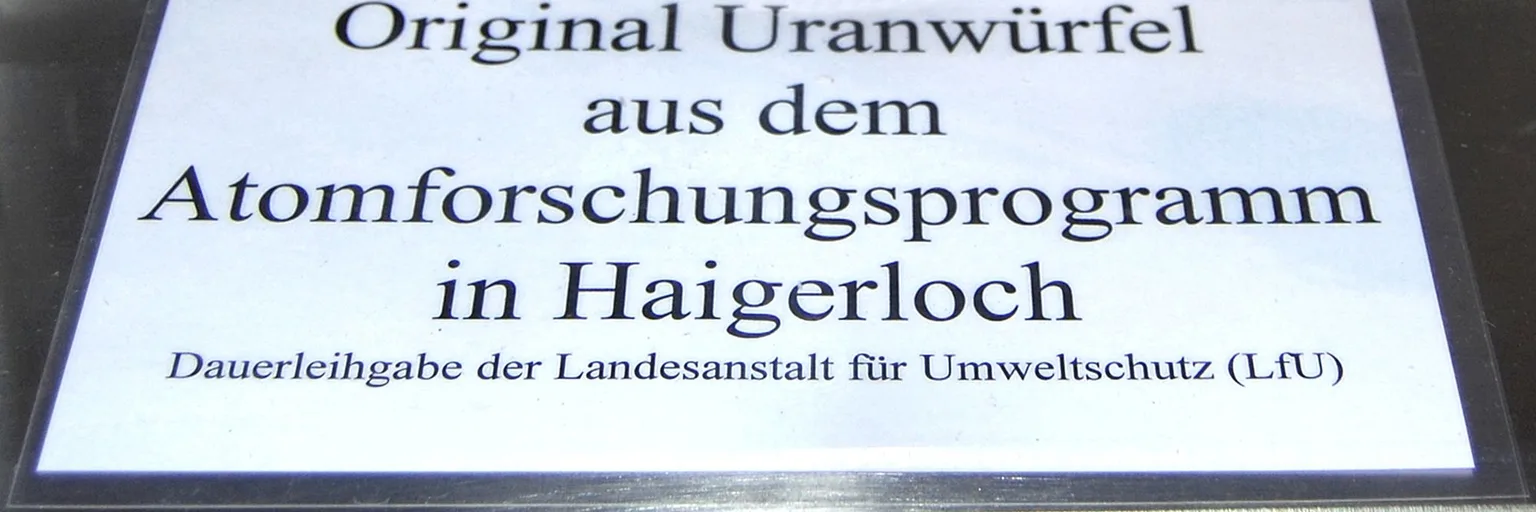
The Nazi bomb that never was: what two uranium cubes tell us
A simulation built on two surviving uranium cubes shows Heisenberg's near-miss story was off by a factor of about two, and the myth outlived the physics.