A dead star's double ring says planets outlive their suns, not our fate
Two rings of debris around white dwarf WD J1328−1450 show planetary systems can survive stellar death. It's a vivid preview of our future, but one system is not a forecast.
AI-generated image
Is the Solar System's ending already written in the sky, 1,600 light-years away? That is how some headlines are selling a new result about a dead star. We think the discovery is genuinely beautiful and genuinely useful. We also think "the future of the Earth" is a bigger claim than one white dwarf can carry.
What the telescope actually saw
Astronomers led by Nicola Gentile Fusillo of the University of Trieste used ESO's Very Large Telescope to study the white dwarf WD J1328−1450. As ESO describes it, the debris around it are the remains of planets that once orbited the star. Until now, as Galileo notes, every known dead stellar system had a single disc of debris around its white dwarf.
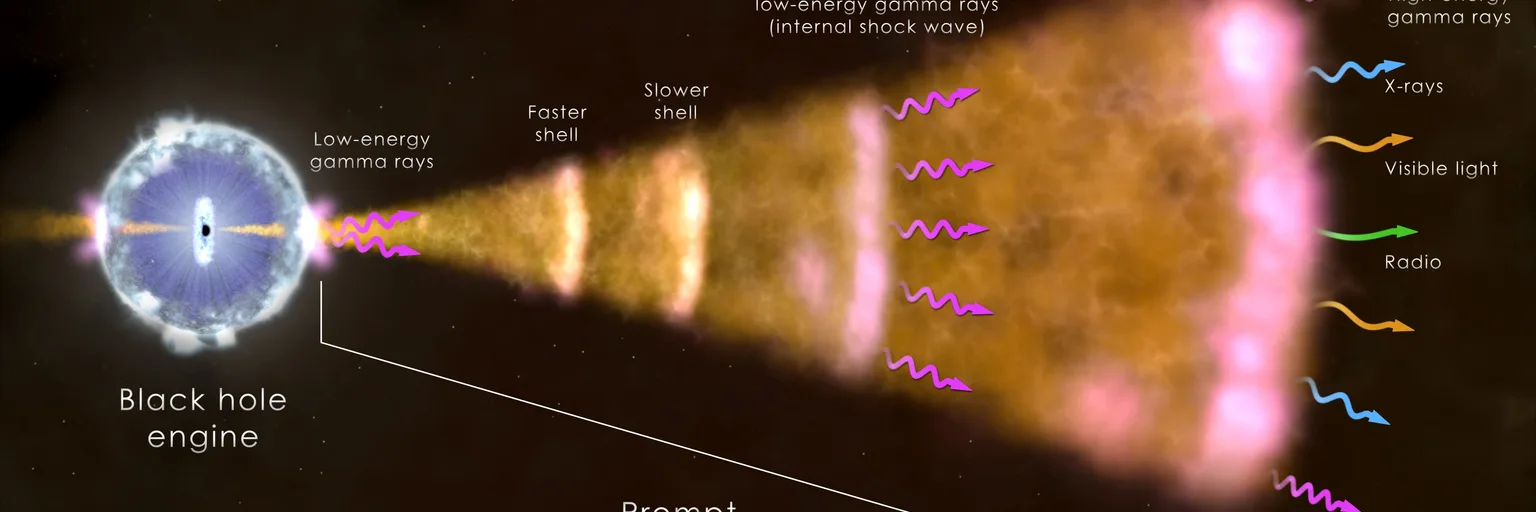
This one is different. According to the Trieste team's account, reported by Media INAF, it is the first double debris disc ever observed around a white dwarf. Two concentric rings of gas are separated by a gap where gas seems absent, and both sit inside a wider disc of dust. The result was published in Nature Astronomy, so it is peer-reviewed, not a press-release flourish. The disc's structure points to two planetary bodies shaping it, one of them about the size of Pluto, though MeteoWeb's summary also mentions a Moon-sized option. That uncertainty matters.
Survival is the real headline
Forget the Pluto comparison for a moment. The important idea is architecture. A star dying is violent, and you would expect it to flatten whatever orbits it into a single smear of rubble. Instead, there is a gap and two distinct rings. In the words of the researchers' statement, as published by the university, this is the first time we see that "even around a dead star, such a complex configuration can survive."
We find that more interesting than any forecast. It suggests that planetary systems don't simply end when their star does. They get rearranged, ground down and reshaped, but some of the structure persists. A white dwarf stops being only a tombstone and becomes something closer to an archaeological site.
The chemistry backs up the idea that the rings are not twins. The inner ring is rich in magnesium, while the outer one has far less of it relative to calcium. Different compositions at different distances sound like different parent material. That is a clue worth following, even though the documentation we have doesn't tell us what each ring was made from.
A preview, yes; a prophecy, no
Here is where we'd pump the brakes. Focus asks whether this is the future of the Solar System, and the honest answer is "perhaps, in some respects." Our own system has a Sun that will eventually die, planets, and debris reservoirs. That makes WD J1328−1450 a legitimate comparison. But it is one star, with an unknown history, and the double ring is described precisely because it is rare. A rare case is a poor basis for a forecast about the typical outcome.
There is also a gap between observing a structure and explaining it. Two planetary bodies shaping the rings is the leading interpretation, not a measured fact about objects anyone has seen. Until other white dwarfs show similar double discs, or the interpretation is tested in detail, treat the Pluto-sized body as a well-motivated inference.
Who benefits from this result? Anyone modeling what happens to planets after stellar death, because they now have a concrete target with an unexpected shape. Who loses? The tidy assumption that dead-star systems are all single discs. That assumption just got a counterexample.
Our verdict
Read this as a proof of concept, not a prediction. The finding shows that planetary remnants can keep a surprisingly organized structure around a white dwarf, which is encouraging for anyone who wants to use these stars as probes of what planets were made of. It does not tell us what the Earth's remains will look like billions of years from now. For that, we need many more white dwarfs with many more rings, or none at all. Until then, enjoy the preview, and be suspicious of any headline that treats a single system as a crystal ball.
No topics yet: start the first one.
More stories
A Saharan rock from Mars shows what free samples can tell us
Teghaza 001, a meteorite at least 4.1 billion years old, hints at a wetter early Mars. It also shows why a lucky find from the desert needs careful, modest reading.
Betelgeuse calming down isn't an anticlimax: quiet is data too
After months of fading, the red supergiant has stopped sinking, for now. That's no letdown: each wobble of Betelgeuse is teaching us how little we knew about stars near the end of their lives.
Teghaza 001 is a free Mars sample, and a reason to want more
A 4.1-billion-year-old rock from the Sahara shows how much meteorites can teach us about early Mars, and why that is an argument for sample return, not against it.
GRB 260310A shows why "modest" is a risky label for a cosmic blast
A gamma-ray burst that looked modest hid a far more energetic story in its afterglow. Brightness is a view from one angle, not a verdict on power.