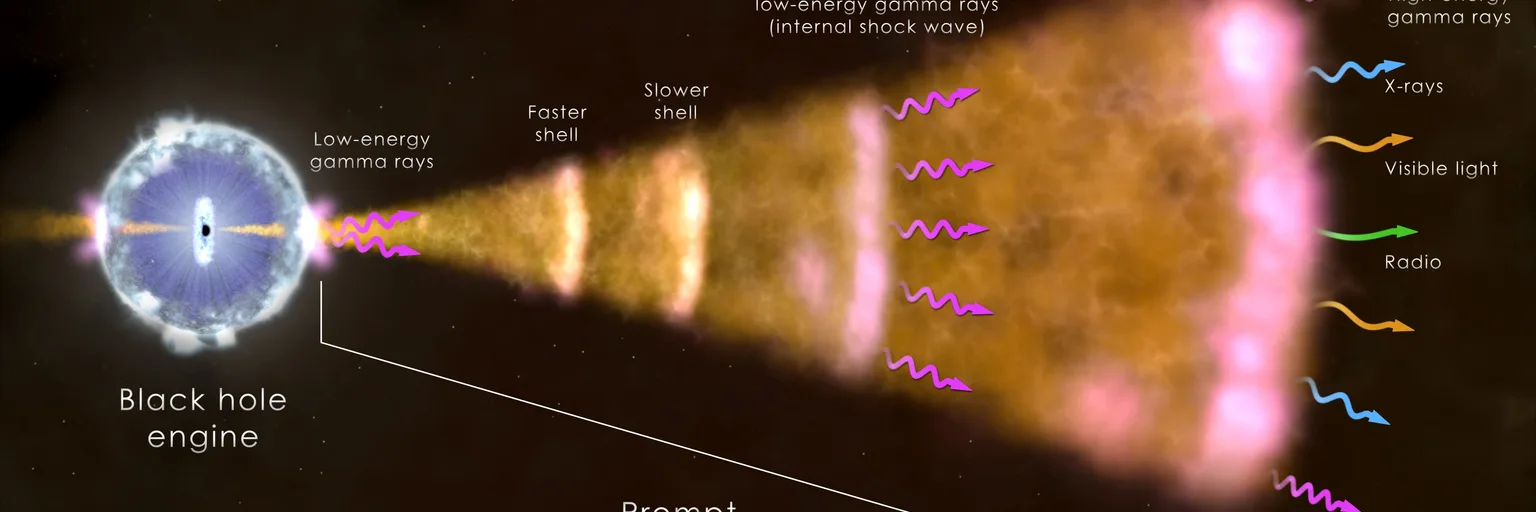
Moon or planet? The CD-35 2722 object shows names matter less than origins
A Jupiter-mass body circling a brown dwarf strains our vocabulary. The useful question isn't what to call it, but how it formed, and that is still open.
Photo: ESO/M. Kornmesser / Wikimedia Commons (CC BY 4.0)
When is a moon not a moon? Apparently when it weighs about as much as Jupiter and orbits something that is neither a proper star nor a proper planet. That is the puzzle behind CD-35 2722, a system 73 light-years away, and it is a good reminder that astronomy's vocabulary was built for one tidy solar system.
This is a strong candidate, not a settled discovery
As Le Figaro reports, the system consists of a small star about half the mass of the Sun and a brown dwarf roughly twenty times less massive than that star. Observations with the European Southern Observatory's facilities in Chile point to a further object, about the size of Jupiter, orbiting the brown dwarf. Astronomers are divided over whether to call it a planet or a moon.
The study appeared in Nature, whose summary describes radial velocity measurements as evidence for a Jupiter-mass exosatellite around CD-35 2722 B, "a promising detection of an exomoon-like object." Note the wording: promising, and "-like." Other outlets say "if confirmed" and call it the strongest exomoon candidate so far. We would take that caution seriously. This is a strong candidate, not a settled discovery.
The word "moon" is doing too much work
In our solar system, "moon" quietly means something small that orbits something big. A Jupiter-mass companion wrecks that shortcut. If the thing is as massive as the planet we use as a yardstick for giants, why is its status decided by what it happens to circle?
The brown dwarf muddies things further. It sits in the murky zone between planets and stars: too massive to be a planet, too small to sustain ordinary hydrogen fusion. So we have a "moon" of a "not-quite-star" that is itself in orbit around a star. Every label in that chain is a convention, and conventions are exactly what Pluto's demotion in 2006 taught us to distrust. A new dwarf-planet candidate in the news this week, 2026 ED138, shows how much those categories still rely on criteria like orbit-clearing.
We think the fussing over the word is partly a symptom of the first-ever bragging rights. "First exomoon" is a headline; "odd low-mass companion in a hierarchical system" is not. That's understandable, but it shouldn't drive the science.
Formation is the real question
What would actually distinguish a moon from a planet is history. Moons in our solar system are generally thought to form in a disk around their host, or be captured; planets form in a disk around a star. If this object grew in a disk around the brown dwarf, "moon" is a defensible description. If it formed like a small binary companion, essentially a sibling, then it's closer to a planet or a miniature version of a stellar pair, whatever we call it.
The published summaries we have seen don't settle that, and we won't pretend otherwise. But they suggest what to watch: follow-up measurements that firm up the orbit and mass, and models that test whether a brown dwarf could build such a heavy companion. A name can be argued over in a committee; a formation pathway can be tested.
Our verdict: treat the "moon" label as a placeholder and the detection as promising but unconfirmed. If it holds up, the lasting value won't be a first-of-its-kind trophy. It will be a new data point about how far down the mass scale the processes that make planets and companions reach. Names can follow the physics, as they did for Pluto. They shouldn't lead it.
No topics yet: start the first one.
More stories
A Saharan rock from Mars shows what free samples can tell us
Teghaza 001, a meteorite at least 4.1 billion years old, hints at a wetter early Mars. It also shows why a lucky find from the desert needs careful, modest reading.
Betelgeuse calming down isn't an anticlimax: quiet is data too
After months of fading, the red supergiant has stopped sinking, for now. That's no letdown: each wobble of Betelgeuse is teaching us how little we knew about stars near the end of their lives.
Teghaza 001 is a free Mars sample, and a reason to want more
A 4.1-billion-year-old rock from the Sahara shows how much meteorites can teach us about early Mars, and why that is an argument for sample return, not against it.
GRB 260310A shows why "modest" is a risky label for a cosmic blast
A gamma-ray burst that looked modest hid a far more energetic story in its afterglow. Brightness is a view from one angle, not a verdict on power.