Bolivia's New Cat: More Than a Discovery, a Conservation Imperative
The identification of *Leopardus tilcayo* in Bolivia, the first new wild cat in over a century, underscores the vibrant hidden biodiversity in remote ecosystems and the indispensable role of local communities in safeguarding these natural treasures.
AI-generated image
In an era where much of the natural world seems cataloged and categorized, is it still possible to unearth a completely new species of feline, a creature of such charisma, after more than a century? The recent announcement from Bolivia suggests not only that it is possible, but that such discoveries highlight profound truths about our planet's hidden biodiversity and the often-unacknowledged role of local communities in its preservation.
Scientists have formally identified a new wild cat species in the cloud forests of Bolivia's Yungas region: the Leopardus tilcayo. This marks the first such discovery in over a hundred years, since the identification of the Uruguayan Pampas cat in 1923, as Confirmado.com.ar reports. The remarkable journey to its identification began not in a research lab, but in the hands of a local resident who found a solitary cub and, believing it to be an abandoned domestic cat, provided it shelter and an unconventional diet of macaroni, rice, and eggs. This accidental act of kindness eventually led the animal to the Senda Verde wildlife sanctuary, where biologists noted its distinctive morphology, prompting the genetic analysis that confirmed its unique lineage.
The Leopardus tilcayo is a small felid, measuring around 46 centimeters long and weighing about 1.4 kilograms in adulthood. Its light brown fur, adorned with dark, open, and irregular rosettes, offers exceptional camouflage within its humid mountain habitat, and its proportionally compact tail is thought to be an adaptation for navigating steep terrain. Initial observations suggest it may be more active at night and subsist on a diet of small rodents.
The Unseen World of Cloud Forests
This discovery forcefully reminds us that vast tracts of our planet remain unexplored, harboring untold species that have evolved in isolation for millennia. The Yungas cloud forests, where Leopardus tilcayo was found, exemplify these crucial refuges of biodiversity. They are ecosystems so rich and complex that they can conceal an entire ancient lineage of felines for millions of years, escaping scientific notice until now. The genomic analysis that identified the Leopardus tilcayo also validated four other Leopardus species and even a new subspecies in Peru, L. tigrinus antisuyo, as Confirmado.com.ar explains. This suggests that the biological tapestry of these regions is far more intricate than we currently grasp, challenging any notion that we have fully mapped the tree of life. It’s a powerful testament to the ongoing saga of evolution, playing out in real-time, beneath the canopy of remote forests.
A Community's Unwitting Guardianship
Perhaps one of the most compelling aspects of this narrative is the pivotal role played by the local community. The initial encounter, the mistaken identity, and the subsequent care provided by a Bolivian inhabitant were the unexpected catalysts for this scientific breakthrough. The fact that the scientific name, Leopardus tilcayo, retains the local designation, as Vistazo details, is a profound acknowledgment. It underscores that traditional knowledge and the everyday actions of people living closest to these ecosystems are invaluable. Far from being passive observers, local communities are often the first line of interaction with the natural world, their observations and actions sometimes leading to discoveries that redefine scientific understanding. Their engagement, even when unwitting, is a potent force in biodiversity discovery and, by extension, conservation.
The Urgent Call for Conservation
While the excitement around a new species is palpable, the Leopardus tilcayo also serves as a stark reminder of what is at stake. These unique cloud forest habitats, while harboring ancient lineages, are increasingly vulnerable to human activities. Deforestation and mining pose significant threats to the Yungas, placing undiscovered and recently discovered species alike at risk. The very ecosystems that allowed Leopardus tilcayo to evolve in isolation are now under pressure. The ongoing work by biologist Paola Nogales Ascarrunz to install camera traps to better understand the species' distribution and behavior is critical, but it highlights an urgent need for broader protective measures. The discovery is not merely a cause for celebration but a compelling call to action: we cannot celebrate new life while allowing its habitat to dwindle. The Leopardus tilcayo could easily vanish before we fully comprehend its place in the natural world if dedicated conservation initiatives are not prioritized.
Ultimately, the story of the Leopardus tilcayo is a complex tapestry woven from scientific rigor, accidental encounters, and the enduring resilience of nature. It’s a powerful testament to the fact that our planet still holds countless secrets, waiting to be unveiled. More importantly, it is a clear statement that the future of this hidden biodiversity depends critically on both scientific inquiry and the respectful, engaged stewardship of the communities who share these precious wild spaces.
No topics yet: start the first one.
More stories
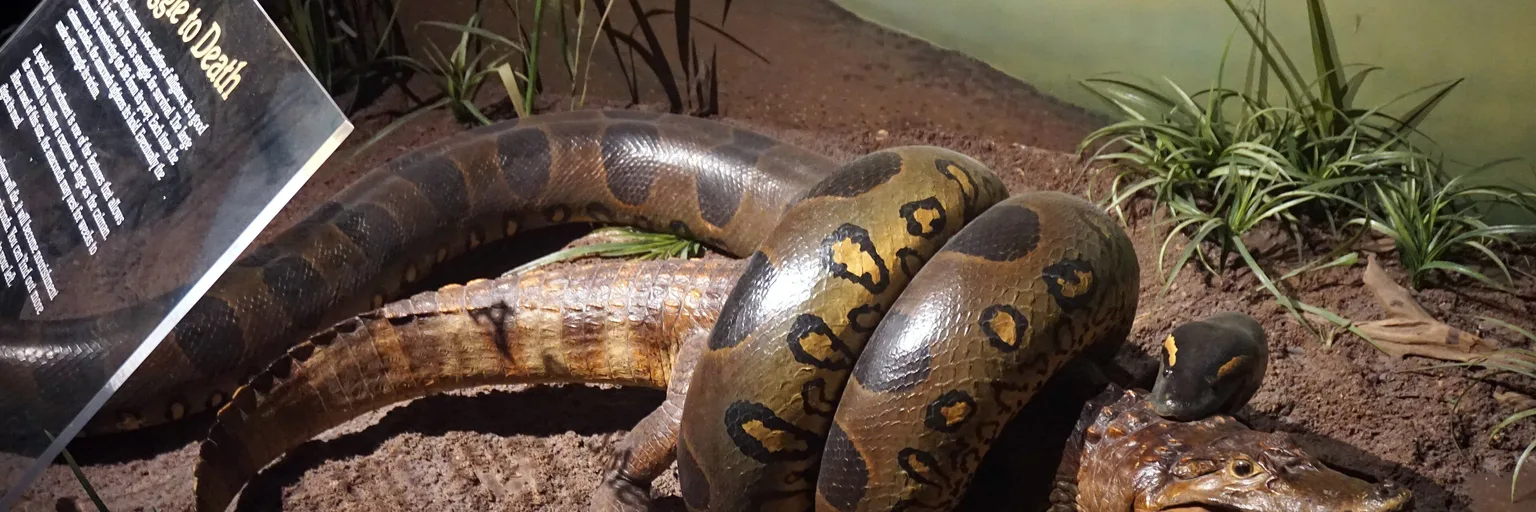
Will Smith and the Anaconda: When Celebrity Catalyzes Science
The discovery of a new giant anaconda species during a Will Smith documentary underscores how unexpected collaborations can elevate scientific findings, prompting reflection on research visibility.
A Selfie and a Giant Water Lily: Social Media's Unexpected Role in Discovery
The tale of a critically endangered giant water lily discovered via Instagram underscores how public engagement and unconventional platforms are reshaping biological exploration and conservation.

Ocean Crust Life: A Hidden World Rewriting Earth's Limits and Alien Prospects
The discovery of thriving ecosystems 2,500 meters deep within the Earth's oceanic crust fundamentally reshapes our understanding of life's boundaries and hints at extraterrestrial possibilities.

Patagonian Yeast: A New Chapter in Evolution's Story
Recent findings from Chilean scientists in Patagonian wild yeast challenge conventional views on adaptation, suggesting evolution is more complex and dynamic than previously thought.