OSIRIS-REx's real legacy is the sample, not the flight
The strongest argument for sample return is already in the labs: Bennu's grains keep answering questions no telescope or probe could, and the funding should follow.
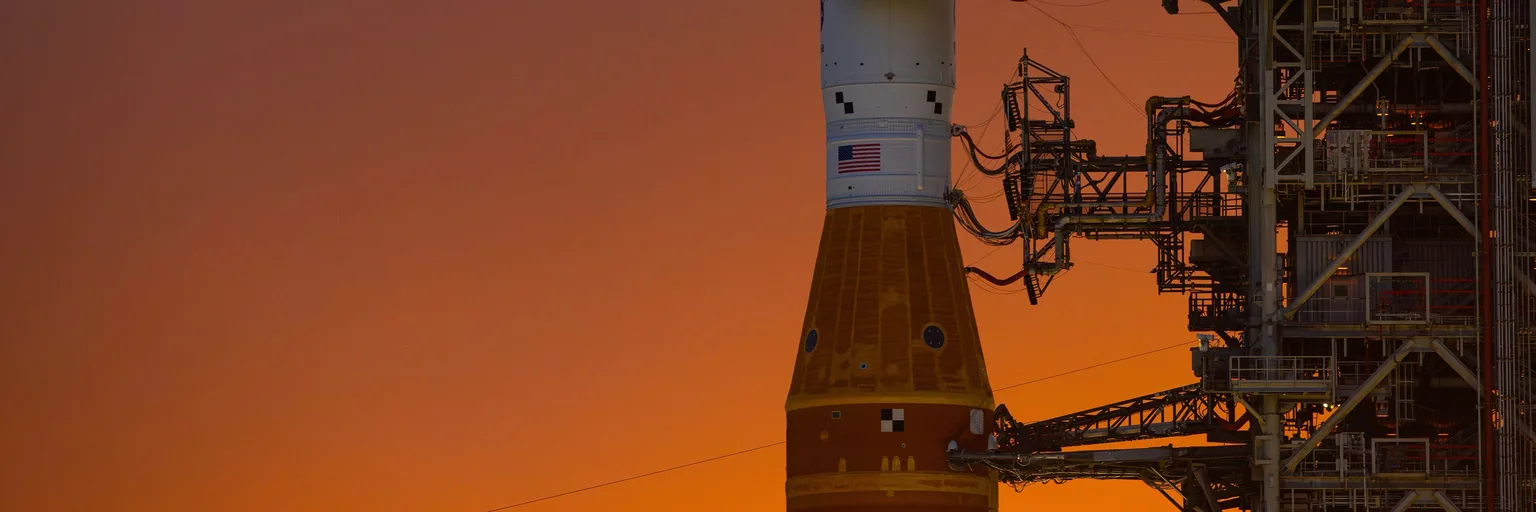
Photo: NASA Goddard Space Flight Center / Molly Wasser / Wikimedia Commons (Public domain)
Which is the better investment: a spacecraft that spends seven years flying, or a few hundred grams of dust that scientists will chew on for decades? The usual story about OSIRIS-REx is a victory lap about the flight. We think that gets it backwards. The flight was the delivery truck. The cargo is the mission.
The facts are simple. The spacecraft launched in 2016, reached Bennu two years later, and grabbed rubble in 2020. As the AP reported, the capsule parachuted into the Utah desert in September 2023. The mission cost $1 billion, and engineers estimated the canister held about 250 grams of material. The spacecraft itself kept flying toward another asteroid, Apophis.
The best science came after the spacecraft went home
Look at what the dust has produced since. The first in-depth analyses, published in January 2025 in Nature and Nature Astronomy, found 14 of the 20 amino acids life on Earth uses for proteins, all five nucleobases, and a full set of 11 evaporite minerals left by ancient brine. Some minerals, such as trona, had never been seen in an extraterrestrial sample before. That is a headline result. But the more telling part is what came next.
By December 2025, Berkeley Lab's team was using synchrotron beamlines to identify nitrogen-rich polymers from a period before the asteroid was exposed to the water that altered its rock. In February 2026, Penn State researchers reported in PNAS that Bennu's glycine may not have formed in warm water at all, but in frozen ice exposed to radiation. Co-lead author Allison Baczynski said the results "flip the script on how we have typically thought amino acids formed in asteroids." In our view, this is what a good sample looks like: different labs, with different instruments, keep asking new questions of the same material.
Remote sensing can't be re-run; a sample can
A probe's instruments are fixed the day it launches. A sample is not. Danny Glavin put it bluntly: some discoveries "would not be possible without a sample-return mission, meticulous contamination-control measures, and careful curation and storage of this precious material." The clues are minuscule and easily destroyed by exposure to Earth's environment. Penn State's Baczynski said that without "investment in specialized instrumentation, we would have never made this discovery."
That is the real argument for sample return. Its value, we'd argue, compounds as lab technology improves. And NASA planned for this: reports in 2023 said it would keep about 70% of the sample, with some available on request to outside scientists. That's the right instinct. A sample held in reserve is a bet that tomorrow's instruments will be better than today's.
The risk is paying for the launch and starving the lab
There is a catch, and it's about money, not science. A mission budget buys a spacecraft and a window of analysis, but we suspect the most interesting results keep arriving long after the launch headlines have faded. The Penn State release carries a note that recent federal funding cuts threaten progress, and says its work was funded by several NASA research awards beyond the mission itself. We would read that as a warning: sample-return money should include a long, protected tail for curation, instrument development and outside researchers.
Nor should anyone oversell the findings. NASA says Bennu's material does not show evidence of life. Researchers found an equal mix of left- and right-handed amino acids, and why life "turned left" remains a mystery. Baczynski summed it up: "We have more questions now than answers." We'd call that the sign of a healthy dataset, not a failure.
Our verdict
Celebrate the landing, but fund the lab bench. We'd expect remote sensing to stay the cheaper option and to keep telling us where to look. Only returned material lets us ask what is actually there, and keep asking for decades. Policymakers weighing the next sample-return proposal should judge it by the curation and analysis budget attached, not just by the launch date. In our view, the part worth the $1 billion is the sample, and it is just getting going.
No topics yet: start the first one.
More stories
Orbit is no longer neutral: a Russian shadow on ICEYE-X36
A Russian satellite reportedly closed to 26 meters from a commercial radar satellite used by Ukraine. With no rules of the road in orbit, any Earth-observing spacecraft can be held hostage.

The teen who found a two-sun planet proves archives need eyes
A 17-year-old intern spotted TOI 1338 b in telescope data. The lesson isn't genius: it's that archives hold more than algorithms can see, and interns are cheap eyes.
Mars won't be limited by rockets: a year in Houston points to people
A year inside NASA's CHAPEA Mars habitat suggests the real bottleneck is food, minds and decisions made far from help, not launch vehicles.
Artemis III's date is the least interesting thing NASA said today
The 2027 target for Artemis III matters less than what the mission now tests: whether two commercial landers and their rockets are ready, and whether NASA will tolerate a realistic schedule.