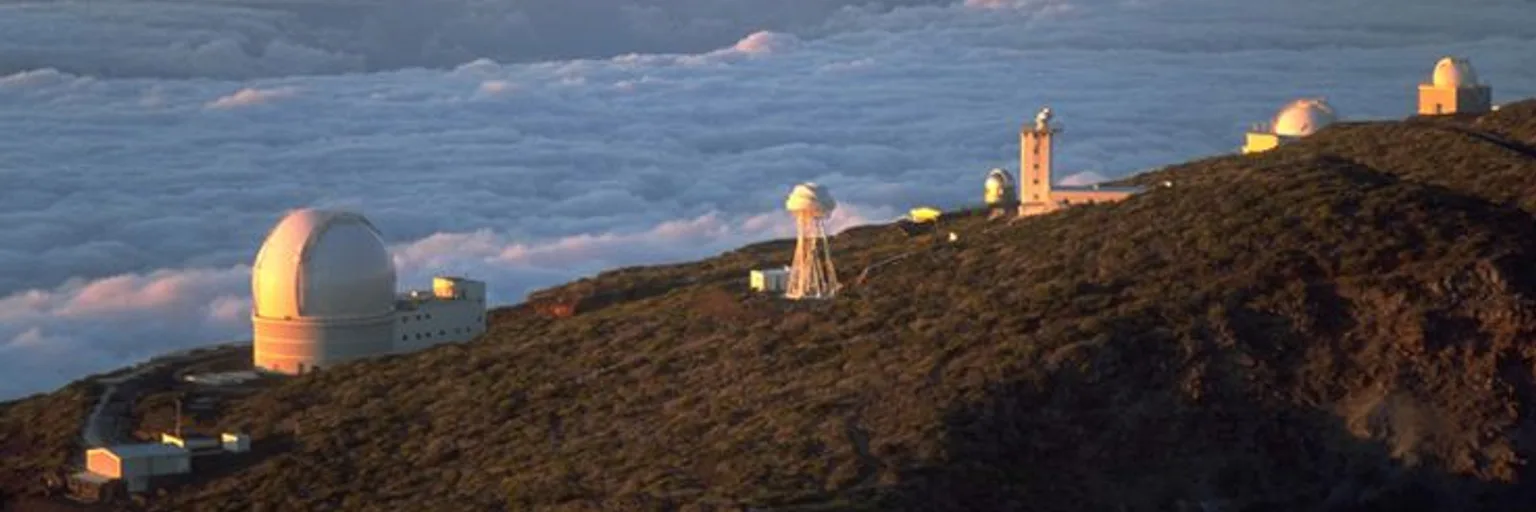
Helmi's Kavli Prize shows the Milky Way is a fossil record
Reconstructing a collision from 10 billion years ago using stellar motions is one of astronomy's quiet triumphs, and the Kavli Prize for Amina Helmi deserves wider public credit.
Photo: NASA/JPL-Caltech/UCLA / Wikimedia Commons (Public domain)
How do you reconstruct a car crash that happened ten billion years ago, when the only witnesses are stars moving through the dark? That is, more or less, the job description of Amina Helmi, and the fact that it sounds absurd is the best argument for why it deserves more applause than it gets.
The facts are simple. As the University of Groningen reports, Helmi shares the 2026 Kavli Prize in Astrophysics with Vasily Belokurov and Rodrigo Ibata for uncovering fossil evidence that the Milky Way was built through mergers with other galaxies. Her best-known result is Gaia-Enceladus, a large galaxy that collided with the young Milky Way around ten billion years ago. The prize comes with a gold medal and a joint one million US dollars. BBC Mundo now frames it as the "Nobel of astrophysics", which is a convenient label, though the Kavli is its own thing, awarded every two years by the Norwegian Academy of Science and Letters.
The galaxy was never calm, we just lacked the data to see it
The Milky Way has long been pictured as a relatively unchanging spiral. The Kavli work dismantles that image. What makes it persuasive, in our view, is that it is not a clever model but an inference from evidence: stars born in another galaxy keep moving together after that galaxy is torn apart. Helmi predicted this during her PhD, and, as she told BBC Mundo, found two small groups of halo stars in the Hipparcos catalog that fit the prediction. Those became known as the Helmi streams.
That is the underrated part. The idea came first, and the data arrived later to confirm it. Gaia then turned a hint into a census. According to NTU, the mission measured about two billion stars between July 2014 and January 2025. Helmi combined that motion data with chemical information from the APOGEE survey, as the Kavli Prize biography explains, to work out when the merger happened, how big it was and what it did to the galactic disc.
Galactic archaeology is archaeology in the strict sense
It is tempting to see this as a feel-good story about one brilliant researcher. We think the more interesting story is methodological. NTU's comparison is apt: both fields reconstruct history from observations made at a single moment, the present. Nobody can rewind the galaxy. Astronomers instead read the leftovers, in positions, velocities and chemical fingerprints, much as an archaeologist reads pottery shards.
And the field is not finished, which is what separates it from a victory lap. The Conversation describes a new Nature Astronomy study from Davide Massari's team that uses globular cluster ages to pin down an even earlier merger, about 1.8 billion years before the Gaia-Sausage-Enceladus collision. The authors themselves flag limits: globular clusters give an incomplete record, and the reconstruction of merger properties relies on models. That candor matters. The headline "10 billion years ago" is a well-supported reconstruction, not a photograph, and the details will keep shifting.
Why this deserves more public credit
Compare the attention given to a single distant galaxy in a James Webb image with what this work gets. The Conversation makes the point neatly: distant astronomy gives snapshots of young galaxies, while galactic archaeology gives their fossils, and the two complement each other. Yet the second half rarely makes the front page, perhaps because there is no dramatic picture of a stream of stars.
There is also a practical payoff. Stellar streams offer a way to probe the distribution of dark matter, which the university says makes up roughly 85% of matter in the universe. And according to NTU, Gaia's fourth data release is expected in December 2026, so more discoveries are likely. That is a forecast, not a promise, but it is a reasonable bet.
Our verdict: the Kavli Prize is deserved, and the label "Nobel-level" is more than marketing if you judge by what changed. A field once content with a static Milky Way now treats it as an archive. If you want one takeaway, look up on a dark night and remember that the calm band of stars is the aftermath of a violent history that Helmi and colleagues have taught us to read.
No topics yet: start the first one.
More stories
NASA's 2028 Moon landing is plausible, but only if hardware starts talking
The agency keeps saying 2028. The date will mean something only when a lander docks with Orion, a suit gets tested and Blue Origin's damaged launch pad is flying again.
NASA needs a fallback for low Earth orbit, not a bet on private schedules
NASA's stated goal is to avoid a gap in crew-capable platforms in orbit. But the plan to replace the ISS has changed course too often to be the only plan.
MMX is the smarter Mars sample bet, and gravity explains why
Japan chose Phobos because Mars itself is hard to land on and leave. That makes MMX a pragmatic bet, though it answers a different question from bringing home Mars rock.
2025 SC79 Is a Warning About What We Cannot See
The asteroid 2025 SC79 is not an imminent threat. Its real lesson is more useful: planetary defense still has a blind spot where the Sun makes dangerous objects hardest to find.