Dragonfly's simulated flight is the unglamorous half of Titan
Titan's thick air and weak gravity make flight easier on paper, but a rotorcraft that must decide alone lives or dies by how rigorously its software is rehearsed on Earth.
Photo: NASA/JHUAPL/AGU / Wikimedia Commons (Public domain)
Which part of a mission to fly a nuclear-powered rotorcraft on another world is the hardest: the rotors, the rocket or a room full of computers in Maryland? Our bet is the room full of computers. NASA has just shown why.
What actually happened
NASA reports that Dragonfly completed its first simulated flight in real time on flight-like avionics testbeds at the Johns Hopkins Applied Physics Laboratory (APL) in Laurel, Maryland. In the simulation the rotorcraft separates from its backshell, scans the dunes below, picks a safe site, turns, descends and lands. It was, in NASA's words, the most comprehensive test to date of the "first flight," and it covered most of the systems and maneuvers planned for arrival at Titan in 2034.
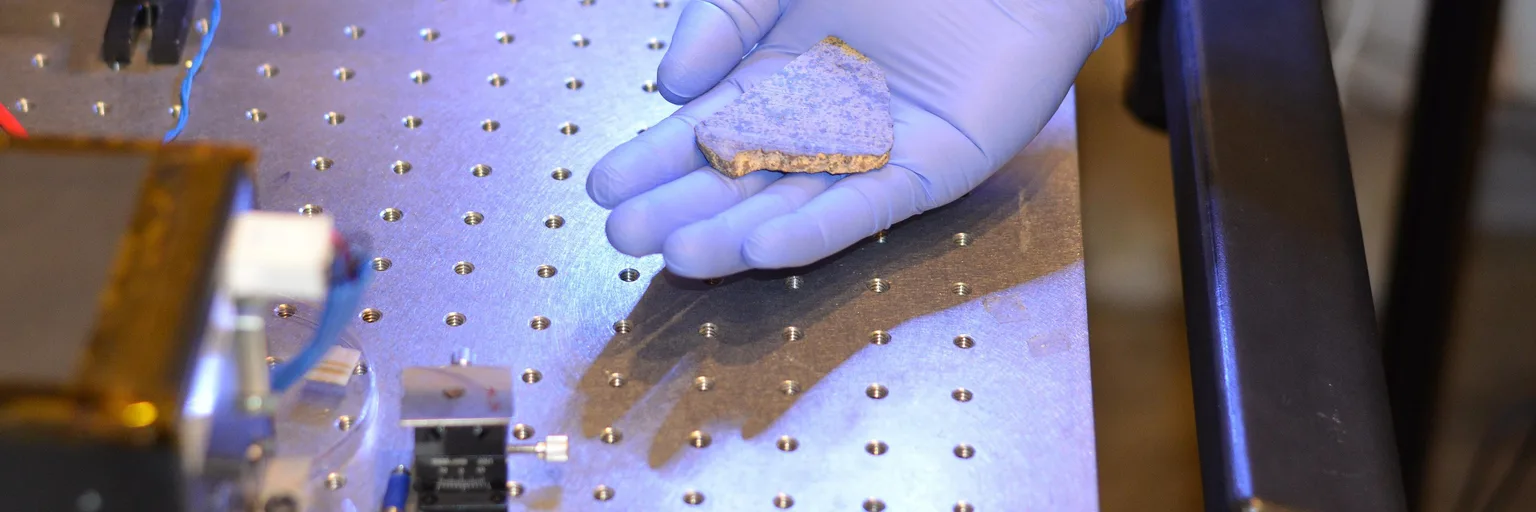
Nobody flew anything. Flight software and avionics were fed simulated data from navigation cameras, inertial measurement units and lidar. A custom camera emulator rendered each scene in roughly 20 to 70 milliseconds, the exposure times the real cameras will use. Launch is no earlier than July 2028.
Easier physics, harder judgment
Titan looks generous to a flying machine. Per ts2.tech, surface air density is about four times Earth's and gravity roughly one-seventh. That sounds like a gift, and for lift it is. But we think it misleads people about where the risk sits. Easy lift does not remove hazards at the landing site, and it does nothing about distance. That outlet cites a 2024 mission briefing estimating 70 to 90 minutes for a signal to reach Titan, so a round trip would take at least 140 to 180 minutes. No one can joystick that.
Hence the line from APL's Zach Putnam that we find most revealing: "Everything we do on Titan has to happen autonomously." If the craft cannot choose a landing spot, judge a slope or react to a fault by itself, the generous atmosphere is irrelevant. The product here is not just a vehicle but a decision-making system, and decision-making systems are validated by running them, over and over, before they are ever needed.
Why the boring, incremental route is the right one
The team did not start with a grand demonstration. It began by simulating something as modest as one spinning rotor, then a short reposition flight, then a partial scouting flight, adding sensors each time. Lidar was the last piece. "Doing it incrementally is what enabled us to build these tests at all," Putnam said. We agree, and we'd go further: that is the template, not a detail. Complex autonomy fails at the seams between components, in timing and handoffs measured in milliseconds, and only integrated runs on flight-like hardware expose them.
The same rigor shows in the less photogenic work. Lockheed Martin engineers in Colorado are pushing and pulling the pose mechanism, which lowers the rotorcraft below the backshell before release, and tilting it to mimic a swinging backshell under a parachute. If that step fails, the elegant flight software never gets its chance.
The limits, stated plainly
This is a press-release-level result from the project itself, not independent review, and it has real limits. The terrain and sensor data were artificial. The run used a testbed, not Dragonfly's own avionics. The deliberate fault-injection tests are still ahead, and NASA has given no date for them. It has also not published the simulated flight's duration, distance or altitude. The pose tests use Earth gravity and a representative mass. A simulation is only as good as the model of Titan behind it, and in our view that is the quiet risk to watch.
Verdict
Don't read this as "Dragonfly has flown." Read it as evidence that the project is spending its effort where the mission will be won or lost. With a long cruise ahead and no one able to intervene, the fault tests and the repeat on real flight avionics are the milestones worth waiting for. Until then, cheer the unglamorous simulation. It is the closest thing Titan's dunes will see to a dress rehearsal.
No topics yet: start the first one.
More stories
A dead star's double ring says planets outlive their suns, not our fate
Two rings of debris around white dwarf WD J1328−1450 show planetary systems can survive stellar death. It's a vivid preview of our future, but one system is not a forecast.

A Saharan rock from Mars shows what free samples can tell us
Teghaza 001, a meteorite at least 4.1 billion years old, hints at a wetter early Mars. It also shows why a lucky find from the desert needs careful, modest reading.
Betelgeuse calming down isn't an anticlimax: quiet is data too
After months of fading, the red supergiant has stopped sinking, for now. That's no letdown: each wobble of Betelgeuse is teaching us how little we knew about stars near the end of their lives.
Teghaza 001 is a free Mars sample, and a reason to want more
A 4.1-billion-year-old rock from the Sahara shows how much meteorites can teach us about early Mars, and why that is an argument for sample return, not against it.