Optogenetics: The Nobel-winning 'light switch' redefining neuroscience
The 2026 Nobel Prize in Physiology or Medicine for optogenetics marks a pivotal moment, recognizing a revolutionary method that allows us to actively control brain activity with light, transforming our understanding of the mind.
AI-generated image
Can we truly understand the brain by merely observing its intricate dance, or do we need a more active hand in its performance? The awarding of the 2026 Nobel Prize in Physiology or Medicine for optogenetics answers this question with a resounding declaration: direct control is the key to unlocking the brain's deepest mysteries. This groundbreaking recognition celebrates a technique that has, quite literally, brought light to the study of the mind, fundamentally changing how we approach neuroscience.
This year's prestigious award was jointly given to Karl Deisseroth, Peter Hegemann, and Georg Nagel for their pivotal discoveries on light-controlled ion channels and the development of optogenetics. Scientific American reported on their discoveries underpinning the field of optogenetics, work that has ushered in a new era for brain research. The trio will share the prize for their advancements that enable scientists to precisely activate or silence specific neuronal populations using light, offering an unprecedented level of control over the brain's complex circuitry.
How Optogenetics Illuminates the Brain
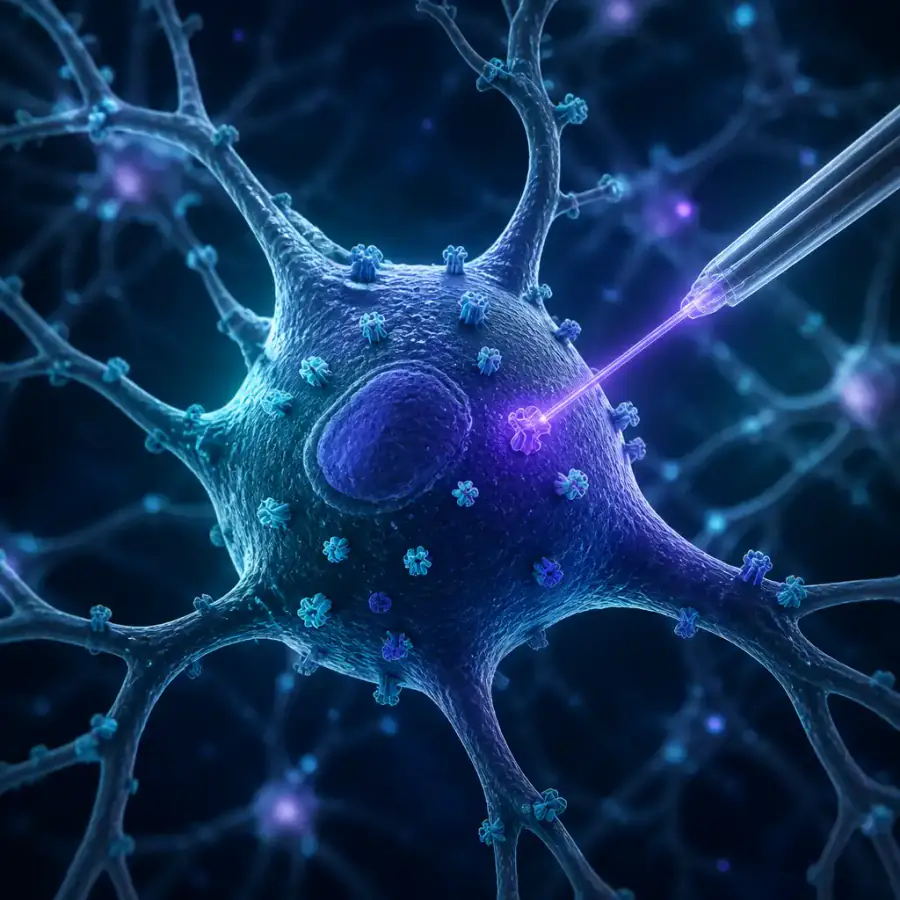
At its core, optogenetics is a marvel of biological engineering, combining genetic modification with the precision of light. The foundation for this technique was laid by Hegemann and Nagel, who, as Pro-Physik details, discovered a remarkable protein called channelrhodopsin in a unicellular alga. This protein, a light-gated ion channel, makes cells sensitive to specific wavelengths of light. Deisseroth then took this discovery and, in what has been described as a technological and conceptual tour de force by the Nobel Committee, developed the method to introduce the channelrhodopsin gene into neurons, enabling scientists to control their activity with light and giving birth to the field of optogenetics.
This revolutionary approach allows researchers to manipulate neural circuits with unmatched specificity, far surpassing the capabilities of traditional pharmacological treatments or even deep brain stimulation. Instead of broadly affecting large brain regions, optogenetics targets only the genetically modified neurons, offering an unprecedented level of control. This precision allows scientists to activate or inhibit individual neurons or specific networks at will, effectively functioning as a molecular switch for neuronal activity. Unlike broad-acting drugs that affect wide areas of the brain or even deep brain stimulation (DBS) which can stimulate unintended nearby neurons, optogenetics precisely targets only those cells genetically engineered to be light-sensitive, thereby minimizing collateral effects.
No topics yet: start the first one.
More stories
Avian Minds: Body Awareness in Cockatoos Reshapes Self-Perception
Recent research on Goffin's cockatoos demonstrating body awareness in obstacle tasks suggests a more complex form of self-perception in birds than previously assumed, reshaping our understanding of animal cognition.

The Diagnostic Maze: Why ADHD, Autism, and Trauma Demand Deeper Insight
The significant overlap in behavioral expressions across ADHD, autism, and complex trauma highlights an urgent need for precise diagnostic methods to ensure individuals receive appropriate and effective support.